REVIEW · PALERMO
Palermo: UNESCO World Heritage Sites Guided Walking Tour
Book on GetYourGuide →Operated by Towns of Italy · Bookable on GetYourGuide
Palermo’s UNESCO sites become simple with a local guide. I love how this walk strings together Piazza Pretoria and the Martorana Church so you understand what you’re seeing, not just where to take photos. I also like that you get into the Palermo Cathedral with a licensed English-speaking guide. One thing to plan for: it’s rain or shine and you’ll be walking for up to 5.5 hours, so wear real shoes.
This is a small-group, hands-on way to get your bearings fast in the city’s historic center. You’ll pass major landmarks, learn the Norman-Arab and Baroque mixes behind them, and get a sweet Sicilian treat during the stroll. The only catch is that if you want to go deep into the Royal sites (like the Palatine Chapel), you’ll likely want the optional upgrade.
If you book the enhanced version, the tour pairs the walking route with a guided visit to the Norman Palace and the Palatine Chapel. That’s the best bet if you want more than exteriors and photo stops, but note that the two parts can use different meeting points.
In This Review
- Key highlights you’ll actually feel on this walk
- First steps in Palermo: Teatro Massimo and the city rhythm
- Vucciria Market area: sights, sounds, and an everyday Palermo moment
- Martorana Church mosaics: where the gold does the talking
- Piazza Pretoria: the marble fountain and the story behind the drama
- Quattro Canti crossroads: Palermo’s perfect geometry check
- Palermo Cathedral: your included entrance and the mixed-style interior
- Norman Palace exposure: what you see on the walk and what the upgrade adds
- The guide factor: why the stories change how you experience Palermo
- Price and value: why $41 can make sense here
- What to wear and how to pace yourself in Palermo’s sun
- Should you book this Palermo UNESCO walking tour?
Key highlights you’ll actually feel on this walk
- Piazza Pretoria’s Baroque marble fountain and statuary, explained in plain language
- Martorana Church mosaics, where multiple cultures show up in gold and stone
- Palermo Cathedral entry with a guided look at how styles blend
- Vucciria Market area photo time, so you can see the street-life vibe
- A sweet Sicilian treat that lands after the walking work
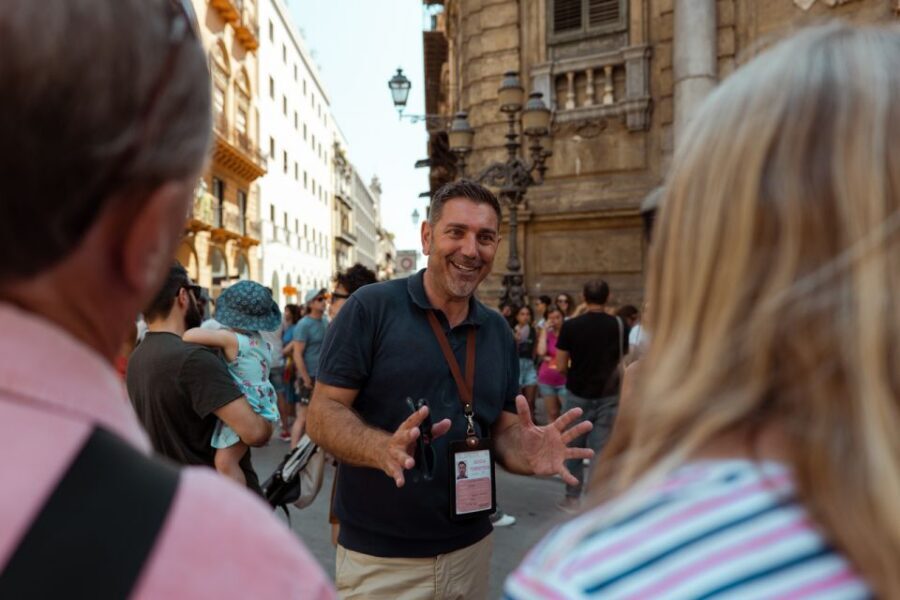
- Guide storytelling you can follow, from people like Renata and Simon named in feedback
First steps in Palermo: Teatro Massimo and the city rhythm
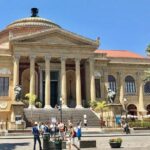
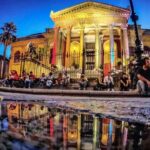
You start in central Palermo, with meeting points that can vary depending on the option you book. From there, you’ll head toward Teatro Massimo, the big, iconic music-and-architecture landmark that helps you orient right away. Even if you only do a photo stop, it sets the tone: Palermo is dramatic, layered, and built for long stories.
Then the walk moves on to Church of Saint Dominic. You’ll get a guided look as you pass by, plus photo time. This stop matters because it shows you how churches in Palermo act like cultural crossroads. You’re not just watching buildings; you’re learning the city’s habit of mixing eras in one neighborhood.
If you’re the type who likes to understand the “why” behind shapes and dates, this opening stretch does a nice job. It gives you context before you hit the more visually jaw-dropping sites.
Other UNESCO and historic site tours in Palermo
Vucciria Market area: sights, sounds, and an everyday Palermo moment
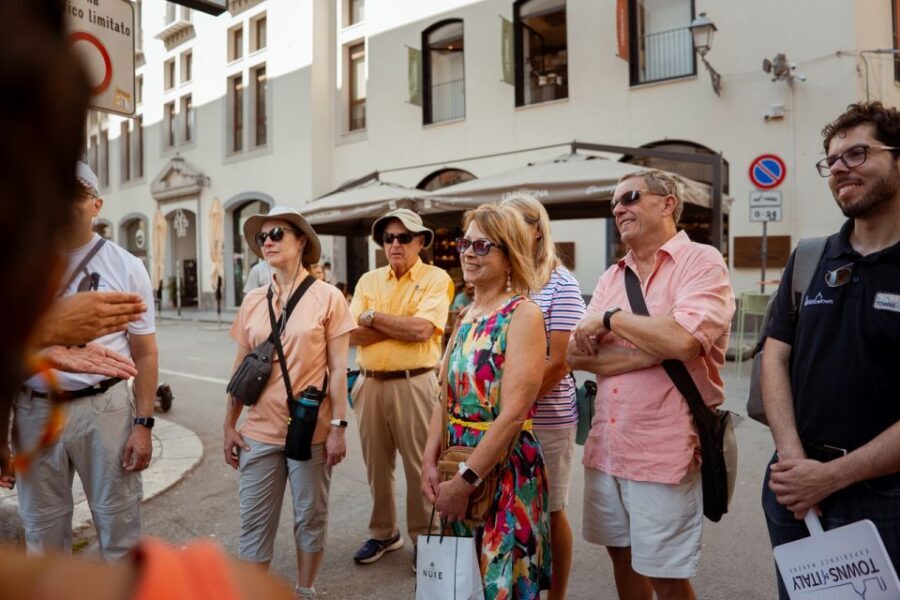
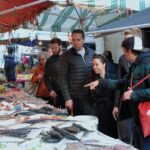
Next up is the Vucciria Market area, again with a photo stop and guided sightseeing as you move through. The best part here is the feel of the place. You get the chatter, the street energy, and that very Sicilian mix of daily life and history sitting side by side.
A walking tour is usually best in these kinds of spaces because you can’t really replicate the atmosphere from a guidebook page. You’re also more likely to notice little details with your guide pointing out what to watch for.
Practical note: markets and streets can be uneven. Even if you’re not going inside shops, you’ll want shoes with grip and a plan to slow down if it’s crowded.
Martorana Church mosaics: where the gold does the talking
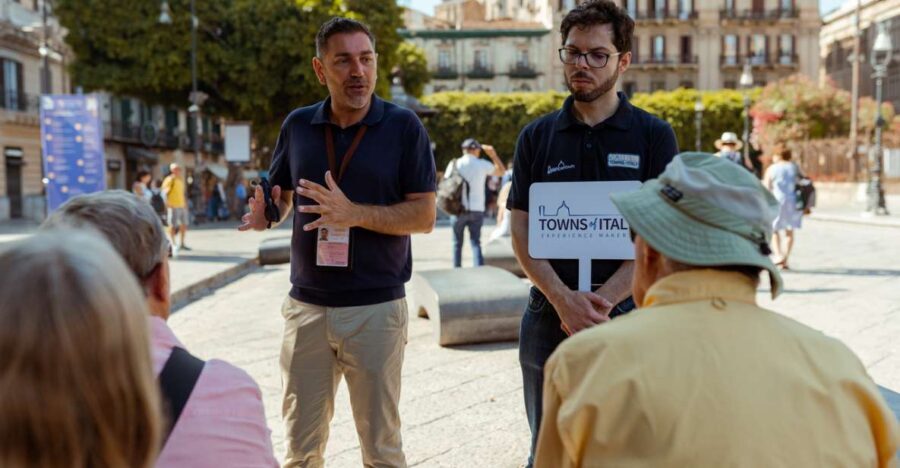
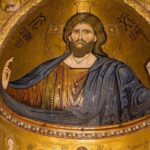
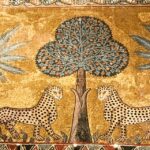
Then you arrive at the big visual payoff: Martorana Church (also known as Santa Maria dell’Ammiraglio). This is where the tour leans hardest into Palermo’s cultural fusion. The highlights call out the golden mosaics, and that’s the right way to think about it. You’re not just looking at decoration; you’re looking at an art form that broadcasts wealth, devotion, and influence.
Expect a guided stop designed to help you read the mosaics. If you’ve ever stared at church ceilings and felt lost, you’ll appreciate the way the guide directs your attention to what matters.
Also, this is one of the most “memorable-per-minute” stops on the route. Even a short look can make the rest of Palermo’s architecture click for you, because you start to see how Norman-Arab and Byzantine-style influence show up in different ways.
Piazza Pretoria: the marble fountain and the story behind the drama
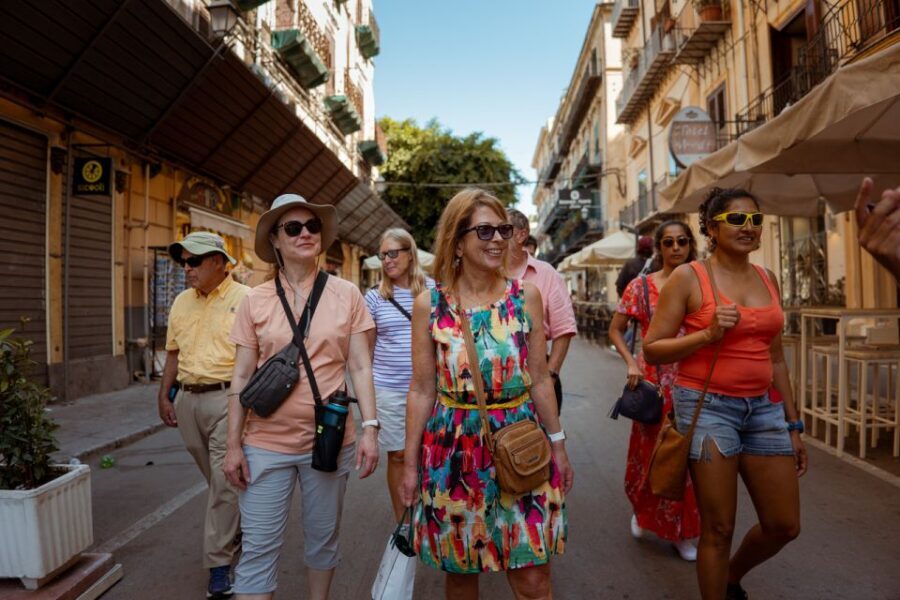
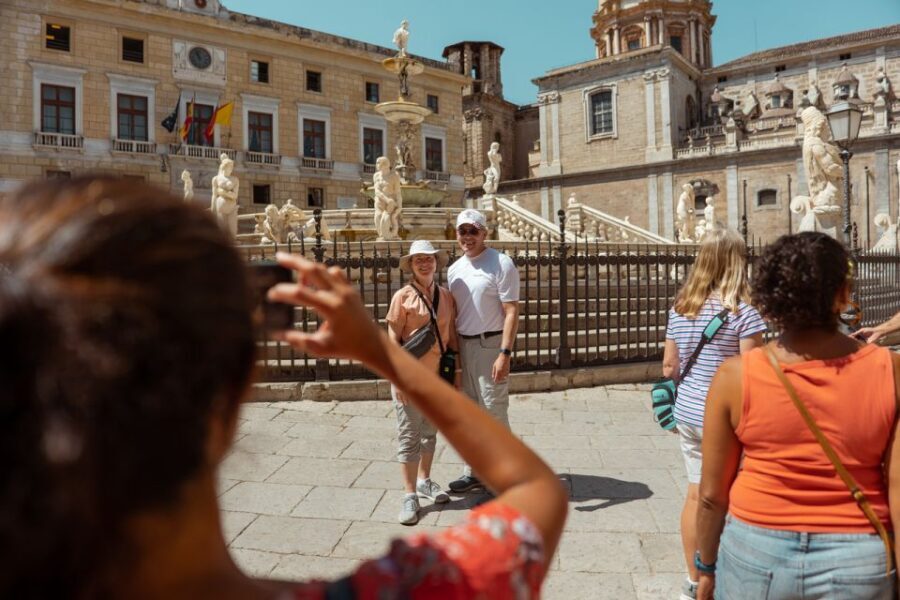
From mosaics to statues: Piazza Pretoria is next, with photo time and guided sightseeing as you admire the Baroque curves and Norman-Arab elegance. The standout here is the marble fountain, often described as dazzling under the light. It’s a great place for photos, but it’s also a great place to slow down and listen to what your guide explains.
This square works because it turns a historical “time capsule” into something you can actually understand. When the guide connects the fountain and surrounding architecture to the city’s ambitions, it stops being random scenic clutter and starts being a statement.
One caution: squares can get busy. Take your photos, then step slightly aside when you’re ready to focus on your guide’s explanations.
Quattro Canti crossroads: Palermo’s perfect geometry check
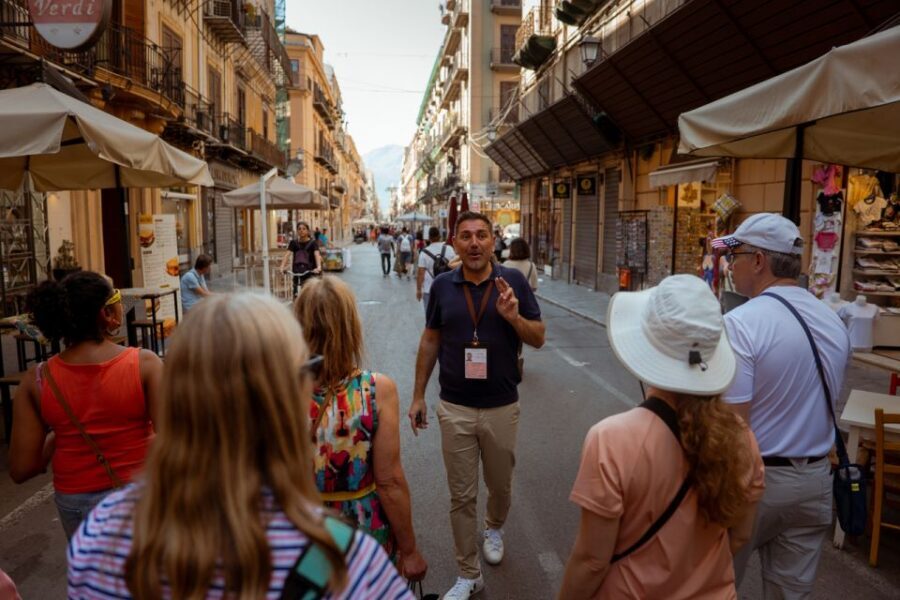
After Piazza Pretoria, the tour moves to Quattro Canti, the famous crossroads with its structured, theatrical look. This is the spot where Palermo’s planning feels almost like stage design: buildings face the intersection, and the whole place feels composed.
A good guided walk makes these kinds of landmarks easier. Instead of just seeing an impressive junction, you learn how it functions visually and historically, which helps you understand why people build in such a showy way at major turning points.
If you’re short on time in Palermo, this kind of stop is a smart use of your energy. It’s small, visual, and tells you a lot about how the city is laid out.
Other walking tours we've reviewed in Palermo

Palermo Cathedral: your included entrance and the mixed-style interior
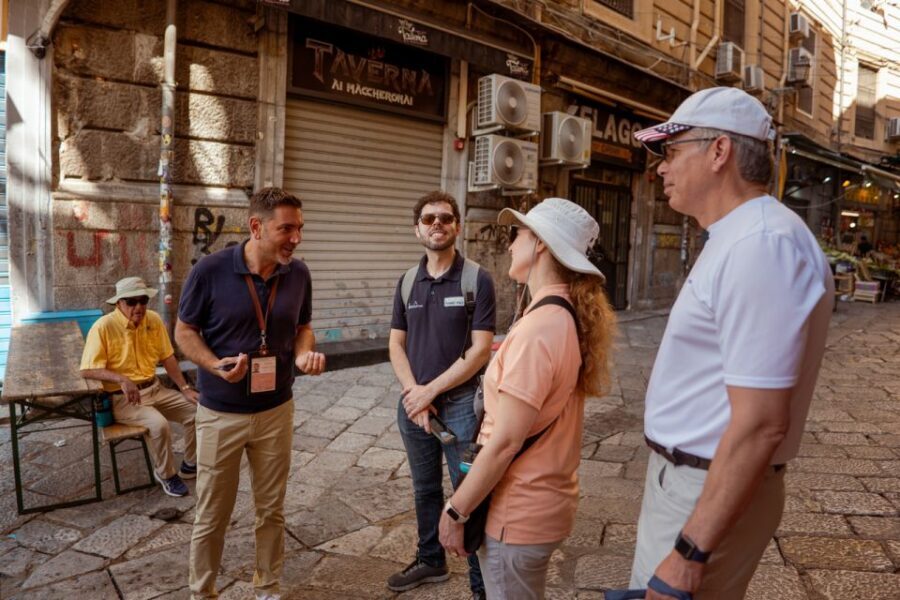
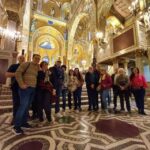
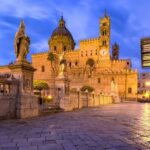
Now the tour hits the one site most visitors expect to spend more time on: Palermo Cathedral. Here, you get a photo stop plus a visit with a guided tour. The most important value detail is simple: entrance to the Cathedral is included.
This is where the tour’s theme pays off. The Cathedral is described as a unique blend of Muslim, Norman, and Christian influences, and that’s exactly what makes it worth paying attention to. As you look around, don’t just hunt for the most dramatic view. Follow the guide’s direction for how the styles connect and where the influences show up.
Even if you’ve seen big cathedrals in other Italian cities, Palermo’s twist is that it reads like layers added by different powers over time. That’s not an abstract concept here. It becomes something you can point to in your own sightlines.
If you care about interior details—ceilings, arches, and how materials shift—this is the stop where the tour feels most complete.
Norman Palace exposure: what you see on the walk and what the upgrade adds
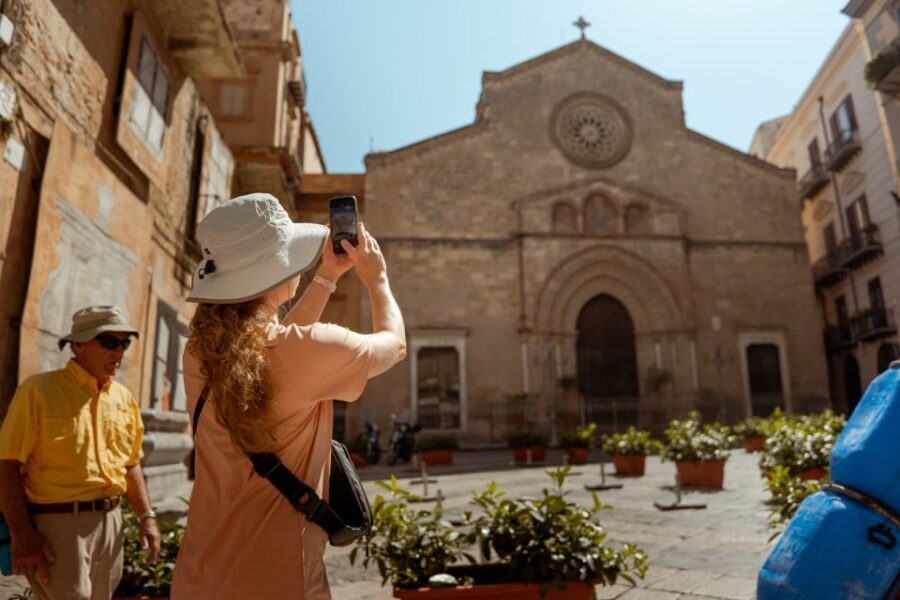
The walking route also includes Palace of the Normans as a photo stop with guided sightseeing as you pass by. On the main walk, you’re mainly seeing the exterior, not going deep into interiors.
That’s why the optional upgrade matters. The enhanced option pairs your walking tour with a guided visit to both the Norman Palace and the Palatine Chapel. If you want the most direct route to the sites tied to Palermo’s Norman era and the famous chapel setting, this upgrade is where you get that extra access.
Think of it like this: the base walk gives you the UNESCO core experience with Cathedral entry. The upgrade adds the major royal interiors so you leave with more than architecture from the outside.
The guide factor: why the stories change how you experience Palermo
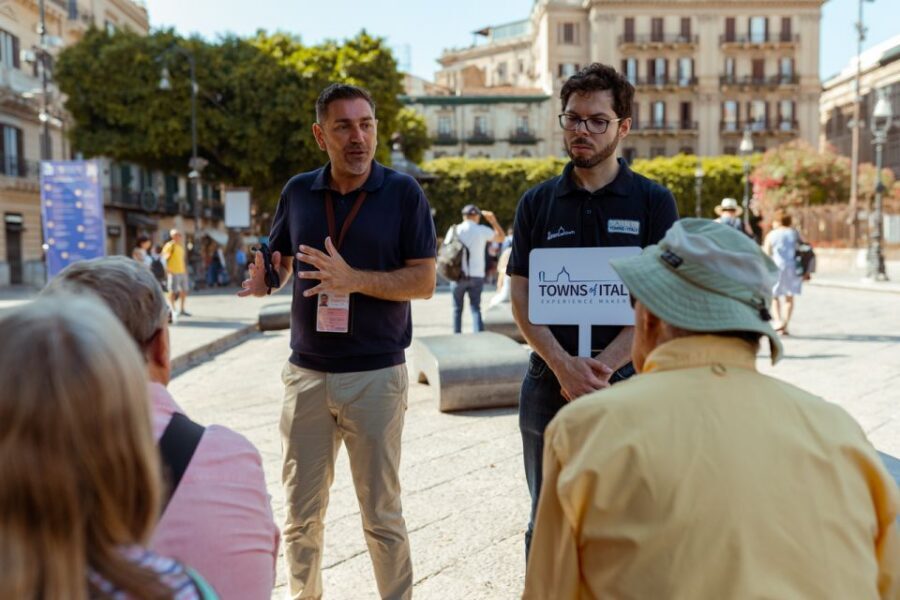
A huge part of the success here is the licensed guide, and the feedback you shared shows a clear pattern: people love when the guide connects buildings to everyday life. Names that come up in feedback include Simon, Simone, and Renata/Renatta, along with guides like Jade, Fabio, Stephania, Enrico, Deborah, and Angela. Even when the guides differ in personality, the common thread is clear: local perspective plus clear explanations.
You’ll also notice practical guiding touches. Some guides are described as keeping the group together, using tools like pointers for detailed ceilings, and adjusting pace in hot weather by finding shade. That matters. Palermo rewards patience, and a good guide helps you slow down without losing momentum.
If you’re the kind of traveler who usually reads signs but wants the human story behind them, this is a strong fit.
Price and value: why $41 can make sense here
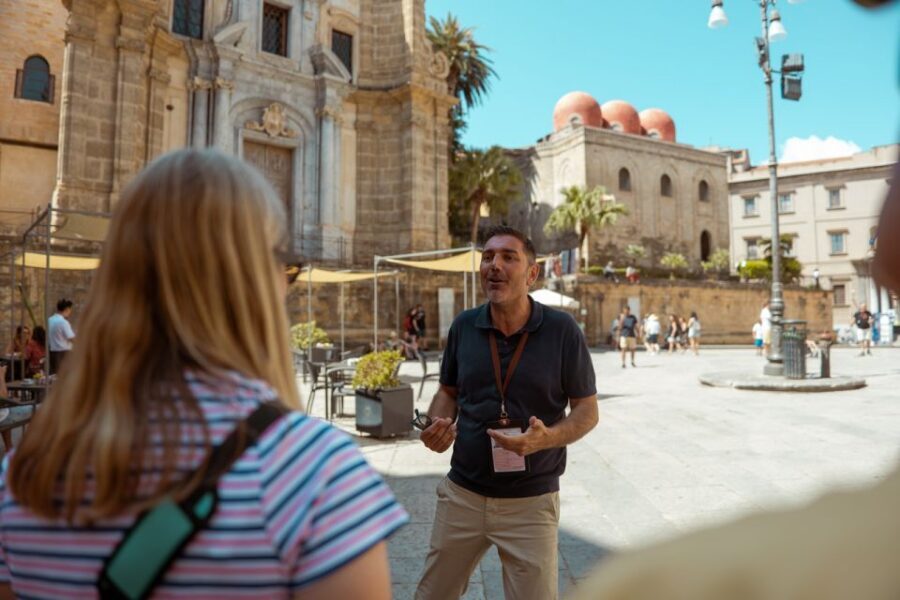
At $41 per person, the value works best because several things are already baked in. You’re paying for a licensed guide, a walking tour through the UNESCO core, and importantly Cathedral entrance. You’re also getting the kind of stop-and-learn structure that makes the architecture easier to understand, especially in a city where influences overlap.
This price feels more reasonable when you consider what it replaces: you’d otherwise spend your own time trying to match buildings to facts while walking across Palermo’s center. Here, the walking route is organized so you get both sightlines and explanations in a tight window.
The tour duration is listed as 3 to 5.5 hours, and that range is useful. If you want a quick orientation that still feels substantial, the shorter end is appealing. If you like time for slower looking and photo breaks, the longer end will feel less rushed.
What to wear and how to pace yourself in Palermo’s sun
This is a walking experience that runs rain or shine, so plan accordingly. Bring a light layer you don’t mind getting warm or damp. And keep water in your daypack even if the schedule feels short. Palermo heat can make “just a few blocks” feel longer than it should.
Mobility note: the provider says they’ll do their best to accommodate special needs or impaired mobility if you let them know in advance. If that applies to you, send the request early so you can match the route and pace to what you can handle.
One more rule that can affect your planning: pets are not permitted on the tour. If you’re traveling with an animal, you’ll need separate arrangements.
Should you book this Palermo UNESCO walking tour?
You should book it if you want a strong first-day plan for Palermo’s UNESCO core, especially if you care about the mix of Norman-Arab, Baroque, and Christian influences. It’s also a great choice if you want real guidance on what you’re looking at inside Palermo Cathedral, not just a quick stop.
Skip it or consider the upgrade if you’re mainly excited about the Royal sites and want more interior time at the Norman Palace and the Palatine Chapel. In that case, the enhanced option will feel more satisfying because you’re not limited to exteriors.
If you like a structured stroll with a local guide who tells the story behind the stones—and you’re comfortable walking for a few hours—this is a good-value way to start (or refocus) your Palermo visit.