REVIEW · PALERMO
Tour Cappella Palatina e palazzo Reale: patrimonio Unesco
Book on GetYourGuide →Operated by Palermo a Piedi - Walking Tour · Bookable on GetYourGuide
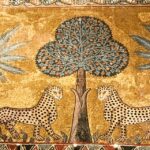
Gold mosaics in a royal chapel.
This one-day walk through Palermo pairs the Palazzo dei Normanni with the Palatine Chapel (UNESCO), where the walls and ceilings do something you don’t forget. It’s guided in Italian, so you’ll get the story as you look—no guessing games.
I really like two things here. First, I love how the visit makes the chapel feel intelligible, from the Byzantine mosaics to the Islamic muqarnas ceiling. Second, I like that you’re not stuck in one room: the palace spaces connect you to Norman rulers and to Frederick II, whose presence turns the building into more than a pretty backdrop.
One consideration: entrance tickets are not included, and the tour is only in Italian. So you’ll want to plan ahead and make sure the language and ticket timing work for you before you go.
In This Review
- Key highlights worth planning for
- Palermo’s Royal Palace and Palatine Chapel: how this day flows
- Entering the right way: Italian-only guiding and tickets you must buy
- The Palace of the Normans: what 2,700 years looks like in person
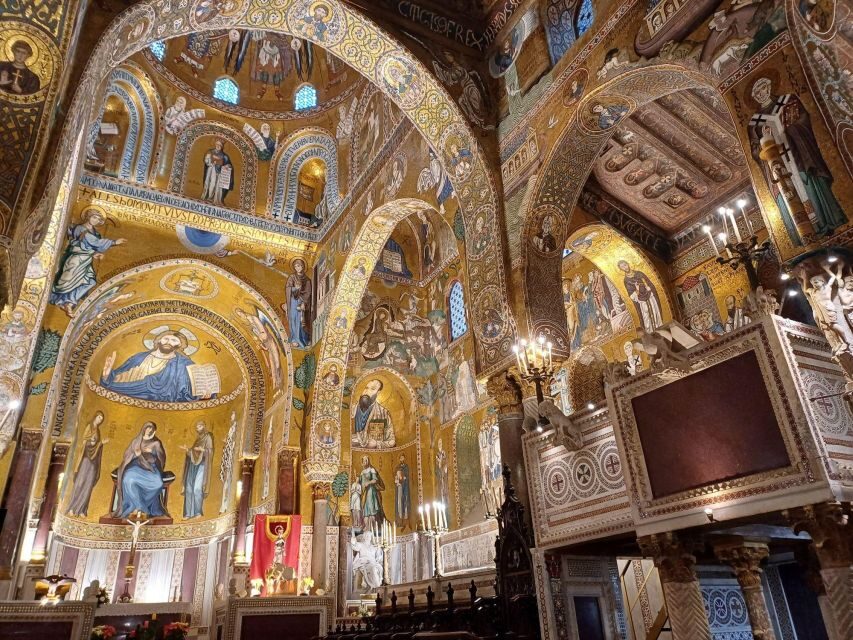
- Palatine Chapel: the golden mosaics and why the art works together
- Frederick II and the Queen Chamber: the surprises inside the royal complex
- What I’d watch for during the tour (so you get more than photos)
- Price and value: why $14 can make sense here
- Dress code and timing reality: small rules that change your day
- Who should book this tour
- Meeting point: where you start and how not to lose time
- Should you book this tour?
- FAQ
- Is the entrance ticket included?
- What language is the tour guide?
- How long is the tour?
- Where is the meeting point?
- What is the price?
- What’s included in the tour price?
- Is the Palatine Chapel part of the visit?
- What should I wear?
- Is cancellation free?
- Is it wheelchair accessible?
Key highlights worth planning for
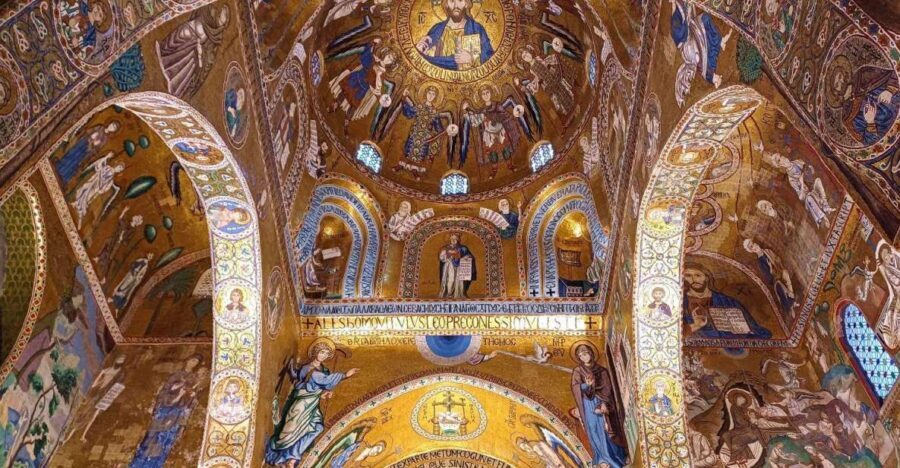
- UNESCO Palatine Chapel with golden mosaics: you’ll see why it’s called the most beautiful church in the world (only in Italian during the tour).
- A palace with 2,700 years of history: see how many eras kept re-shaping the same royal residence.
- Roger of Hauteville’s chapel vision (built in 1140): the guide ties the art to power and ambition.
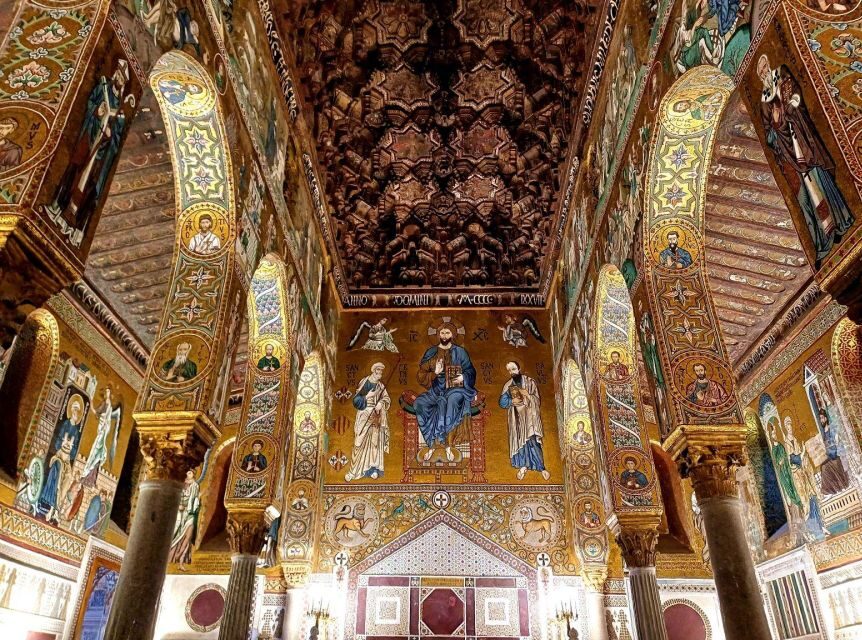
- A mixed art-world in one room: Byzantine mosaics, Islamic muqarnas ceiling, and Romanesque marble inlays.
- Frederick II’s impact: the palace links to the Sicilian Poetic School and other major moments.
- The Chinese-style queen chamber: a standout room that adds surprise to the Norman setting.
Palermo’s Royal Palace and Palatine Chapel: how this day flows
If you only have a short amount of time in Palermo, this tour is built for focus. You’re not wandering around blindly or trying to piece together a timeline from plaques. Instead, you get a guided path that moves between the Royal Palace and the Palatine Chapel, and the art and architecture make sense because someone is explaining what you’re looking at.
The setting matters too. The palace isn’t a modern museum that pretends history happened in a tidy line. It has layers. You’re seeing a royal residence that was fortified, then rebuilt and expanded, then repurposed again and again—so the building itself becomes the storyline.
The experience is also very practical. The duration is listed as 1 day, and the focus stays tight on the two UNESCO-linked stops. This makes it a good choice if you want one big “anchor visit” rather than a scattered hop-through-several-sites day.
Other UNESCO and historic site tours in Palermo
Entering the right way: Italian-only guiding and tickets you must buy
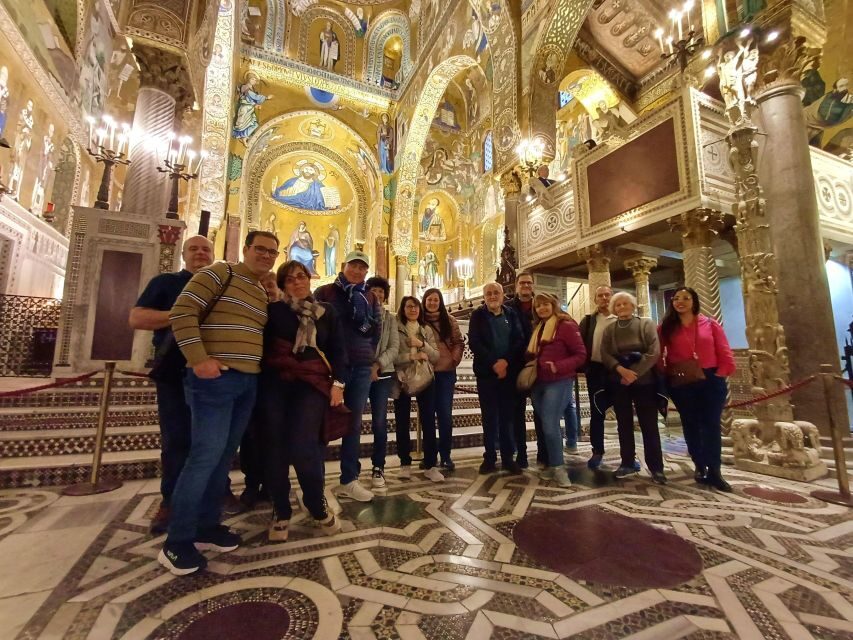
Let’s deal with the one snag upfront. The guided service covers the tour and the professional guide, but entrance tickets to the Palace and Palatine Chapel are not included. That means you should plan to buy them separately at the ticket office or on the official website online.
Also, the tour takes place only in Italian. This is a real factor. If you don’t feel comfortable following guided conversation in Italian, you’ll miss key explanations—especially in a place like the chapel, where the visuals are closely tied to historical context.
Here’s how that affects your day:
- You’ll want your tickets ready (or purchased soon after you arrive) so you don’t lose time.
- If Italian isn’t your thing, consider whether you can still enjoy the artwork without a full guide narration.
The Palace of the Normans: what 2,700 years looks like in person
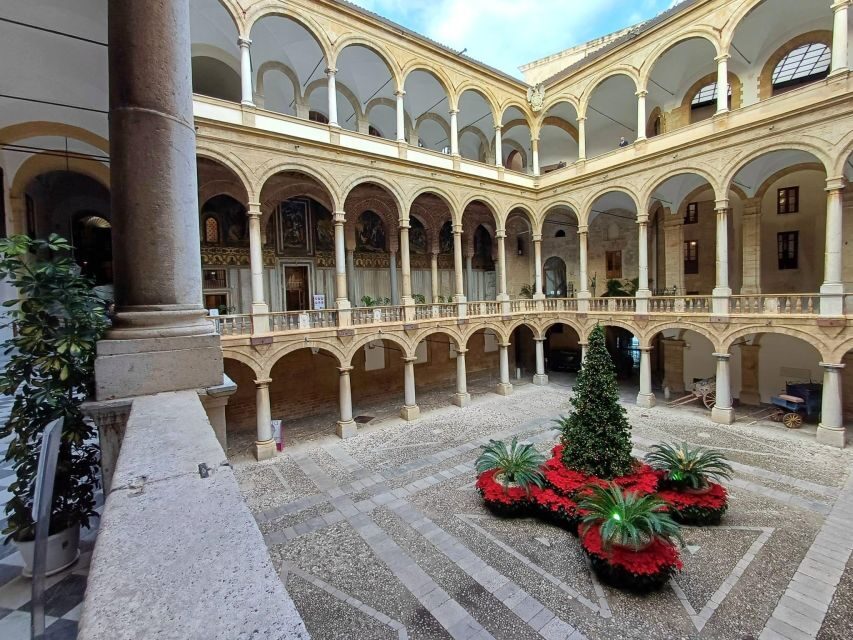
The Royal Palace of Palermo, also called Palazzo dei Normanni, is described as the oldest royal residence in Europe. Whether or not you care about superlatives, the point is clear: this is a place with a long arc of use.
During your visit, you’ll hear how the palace started as a fortified area and was then renovated and expanded by the Norman kings. It became their main residence, a seat of court life, a treasury, and connected to royal production.
And it didn’t freeze there. Under Frederick II, the palace hosted the Sicilian Poetic School. Later, the building also served as the Court of the Inquisition for a period, and afterward became the seat of the Viceroy and the Sicilian Parliament.
You can feel why this matters. When a building has been used in so many different roles, the architecture stops being just “background.” You start noticing how rooms and spaces could be re-used for authority, ceremony, administration, and culture. Even without seeing every era’s artifacts, the building itself gives you a sense of continuity and change.
Palatine Chapel: the golden mosaics and why the art works together
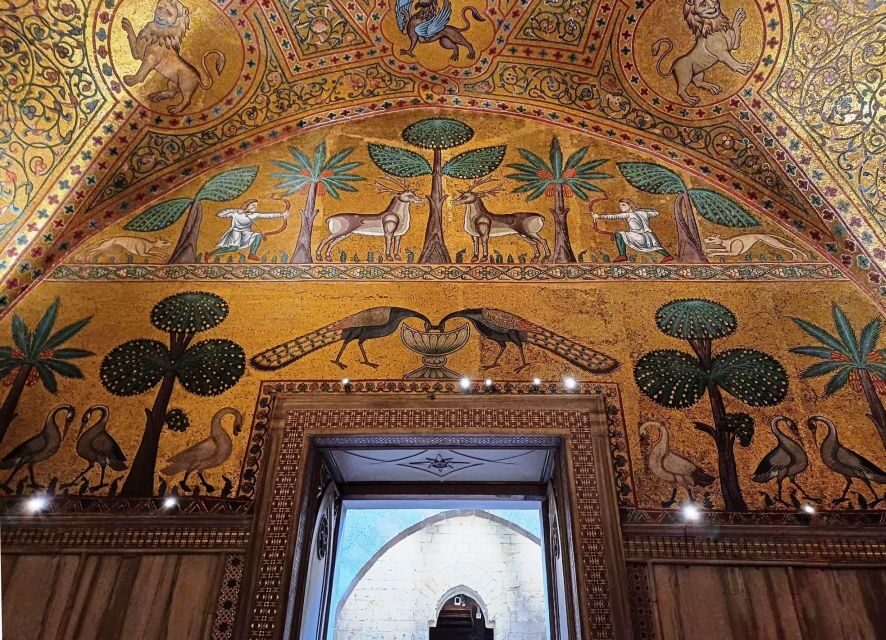
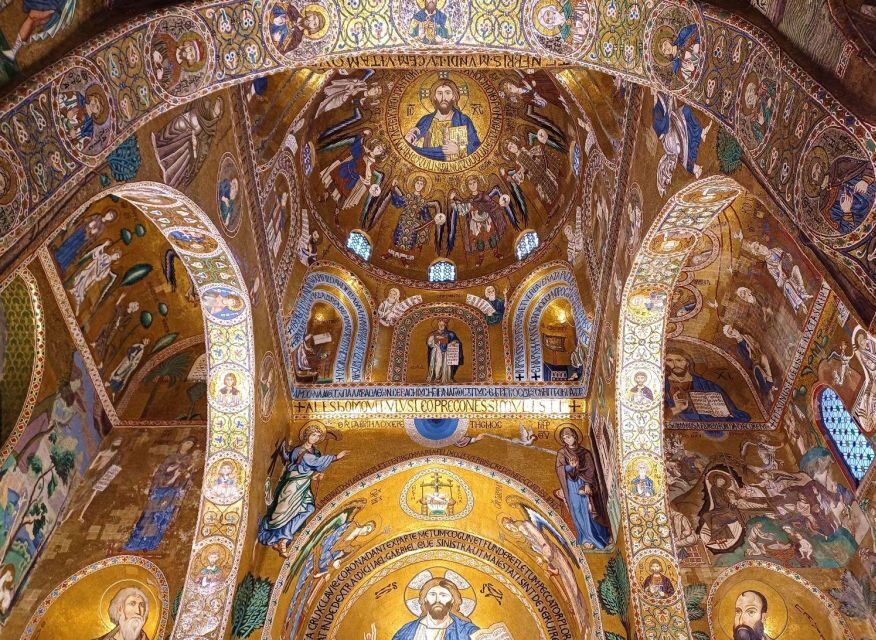
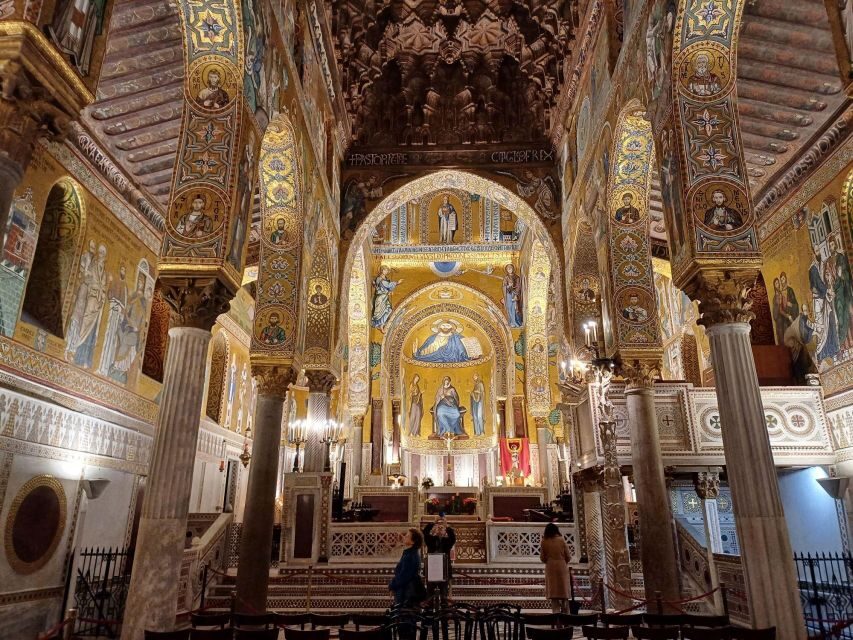
The Palatine Chapel is the reason many people build a Sicily itinerary around Palermo. It was built in 1140 by Roger of Hauteville, and the tour frames it as a symbol of power—ambition made visible.
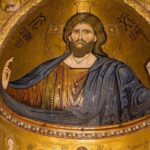
You’re going to be told why it’s famous, but you’re also going to be able to verify it yourself. The chapel is known for being covered with golden mosaics, and the experience isn’t only about shine. The real magic is the mix of styles that somehow stays harmonious.
Here are the exact elements you should watch for during the visit:
- Byzantine mosaics on the walls: these help create that luminous, story-like surface that feels almost like living imagery.
- Islamic muqarnas ceiling: this is the geometric, sculptural style that creates depth and pattern above you.
- Marble floor with inlays of Romanesque tradition: the floor isn’t just decoration—it’s part of the overall visual logic of the space.
The guide’s job is to connect these elements into a single meaning. You’ll hear how the chapel functions like a precious jewel inside the palace: crafted to project authority and unify multiple artistic worlds in one setting. If you like churches as cultural crossroads rather than just religious buildings, this is the stop.
Practical note: if you don’t do well standing for long stretches, plan for that. One piece of feedback you should take seriously is that seating can be limited in parts of the visit. Bring a steady pace mindset.
Frederick II and the Queen Chamber: the surprises inside the royal complex
A lot of palace visits can feel like a straight line: see room, hear facts, move on. This one keeps turning corners.
You’ll hear about Frederick II, the king and emperor who amazed the world, and you’ll connect him to what the palace hosted, including the Sicilian Poetic School. That cultural detail helps you understand why rulers cared so much about place and patronage.
Then there’s a room that sounds like a curveball: the Chinese style queen chamber. The key is that the tour doesn’t present it as a random oddity. Instead, it’s positioned as part of how court life and royal representation could absorb surprising influences.
When you see this chamber, don’t rush past it. Take a moment to let the contrast land. Palermo was a meeting point of cultures, and this palace shows you how those connections can appear in the most unexpected rooms.

What I’d watch for during the tour (so you get more than photos)
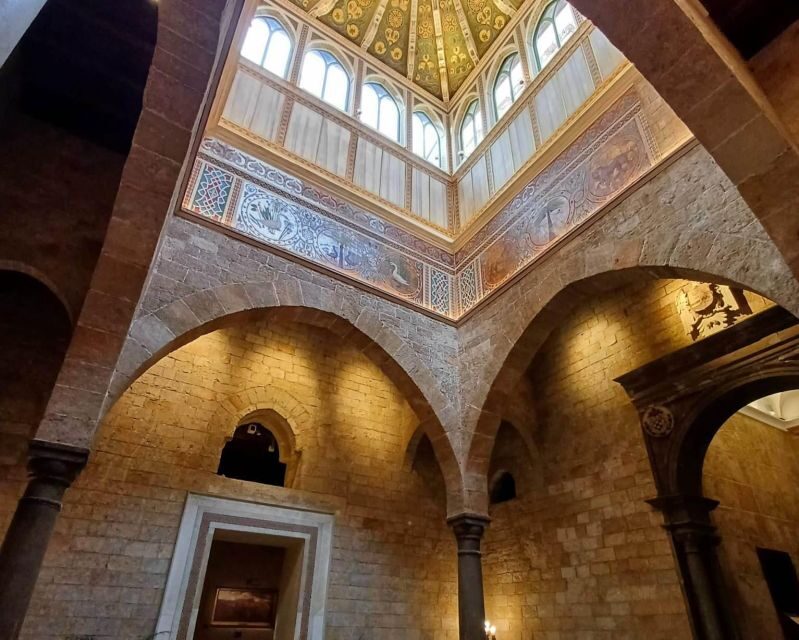
The chapel is obvious to photograph, but you’ll get more out of the visit if you look for patterns and transitions.
Here are smart things to focus on while you’re there:
- In the chapel, track how the mosaics relate to the ceiling. The ceiling’s muqarnas isn’t separate from the rest of the space—it changes how the room feels.
- Look at the marble floor inlays as a floor-level version of the same idea: detailed craftsmanship in a grid of ornament.
- In the palace context, listen for how each major era changed the building’s role: court and treasury under the Normans, cultural hosting under Frederick II, then later institutional use.
This keeps your experience grounded. You’re not just walking through pretty rooms. You’re building a mental map of how power and culture used this palace as a stage.
Price and value: why $14 can make sense here
The price is listed as $14 per person for a 1-day guided experience, with professional guiding service included.
Is $14 “cheap”? Maybe, depending on your expectations. What makes it potentially good value is that you’re getting an organized visit to two major, iconic spaces tied together by a guide who can explain the meaning behind what you’re seeing.
But here’s the fair comparison. Your total cost isn’t just the tour ticket, because entrance tickets are extra. So the real value question becomes: are you likely to pay for guides anyway to understand the chapel and palace context? If you want help turning a famous building into a story, this price can be a solid deal.
If you’re the type who prefers a self-guided stroll and already knows the architecture and history, you might decide to handle the visit on your own. Still, the Italian-only guidance can be a strong perk if you can follow along.
Dress code and timing reality: small rules that change your day
This tour has a specific dress guideline. It’s not allowed:
- Shorts
- Short skirts
- Sleeveless shirts
So plan your outfit like you would for a church interior, not a beach day.
Also, think about comfort. Even though it’s a “1-day” activity, you should expect a lot of moving and time on your feet. With limited seating in some parts, wearing supportive shoes can save your energy for actually paying attention.
Who should book this tour
This is a great fit if you:
- Want one major UNESCO-level stop in Palermo without dealing with all the interpretation alone
- Enjoy the idea of art and history blending together in one space (mosaics, muqarnas ceiling, Romanesque marble inlays)
- Like palace stories that include rulers and cultural institutions, not just decorative sightseeing
- Can handle guided narration in Italian
It may be a mismatch if you need an English-only tour, or if you’re very limited by standing and mobility. The description notes wheelchair accessibility, but it also states it’s not suitable for wheelchair users, so you should treat that as a prompt to double-check before committing.
Meeting point: where you start and how not to lose time
You meet in front of the ticket office, which is described as a kiosk about 100 meters from the Palace entrance.
That matters because many people arrive at the palace gate and then wonder where the group is. If you show up and head straight to the entrance without checking, you can easily miss the start point and waste time.
A simple tactic: arrive a bit early, orient yourself at the ticket-office kiosk, then wait with your tickets sorted.
Should you book this tour?
I’d book it if you want a tightly focused, high-impact day in Palermo centered on the Royal Palace and the Palatine Chapel—and if you’re comfortable doing the experience in Italian. The best payoff here is not just seeing the mosaics; it’s understanding how the palace and chapel connect to Norman ambition and to later moments like Frederick II and the Sicilian Poetic School.
Skip it or rethink it if you don’t want to buy entrance tickets separately, if Italian guidance is a problem, or if your comfort needs make standing difficult.
FAQ
Is the entrance ticket included?
No. Entrance tickets for the Palace and Palatine Chapel are not included. You need to buy them separately at the box office or online.
What language is the tour guide?
The tour guide service is only in Italian.
How long is the tour?
The experience is listed as 1 day.
Where is the meeting point?
You meet in front of the ticket office kiosk, about 100 meters from the entrance to the Palace.
What is the price?
The price is listed as $14 per person.
What’s included in the tour price?
The tourist guide service (only in Italian) and a professional tour guide.
Is the Palatine Chapel part of the visit?
Yes. The tour includes the Palatine Chapel, which is UNESCO-listed, along with the Royal Palace.
What should I wear?
Shorts, short skirts, and sleeveless shirts are not allowed.
Is cancellation free?
Free cancellation is available up to 24 hours in advance for a full refund.
Is it wheelchair accessible?
The details include wheelchair accessibility, but it also says it is not suitable for wheelchair users. If you need this, it’s worth checking carefully before booking.