REVIEW · PALERMO
Palermo Walking Tour with Audio and Written Guide by a Local
Book on Viator →Operated by Walking Cap · Bookable on Viator
Palermo can be confusing on foot, yet still fun. This self-guided tour strings together major monuments and everyday neighborhoods using audio plus a written guide. You get a smart route, the stories behind what you see, and the freedom to pause when you want.
Two things I really like: the way the route mixes big hitters like the Norman Palace and Palermo Cathedral with places that feel local, like La Vucciria market and the Kalsa neighborhood. And the multi-language audio/text helps you stay on track without needing to read every sign.
One thing to consider: it depends on your smartphone and internet access, and you may have to log in or use a password to start the audio. If your phone battery is weak or your connection is spotty, plan ahead.
In This Review
- Key things I’d plan around
- How the audio-first walking tour really works
- San Giovanni degli Eremiti: the Arab-Norman storyline starts here
- Norman Palace (Palazzo dei Normanni): oldest royal palace vibes, plus underground surprises
- Palermo Cathedral: Byzantine, Islamic, and Latin in one stop
- Teatro Massimo: the big opera house stop (plan for the ticket)
- Quattro Canti and Piazza Pretoria: city geometry and a fountain with a name
- La Vucciria market and La Kalsa neighborhood: where Palermo shows up for real
- La Vucciria
- La Kalsa
- Palazzo Abatellis and the Majolica museum: art in tile form
- Palazzo Abatellis
- Museo Delle Maioliche Stanze Al Genio
- Price and value: what you pay for, and what you still need to buy
- Who this Palermo walk is best for
- Should you book this Palermo walking tour?
- FAQ
- How long is the Palermo walking tour?
- Is this a live guided tour or self-guided?
- What language options are available for the audio and text?
- Does the tour price include tickets for major monuments?
- Which stops are listed as free?
- What do I need to use the digital guide?
- Where does the tour start and where does it end?
Key things I’d plan around

- Audio that’s easy to replay when you stop, walk, and stop again
- Google Maps connection so you can follow the route without constantly checking your location
- A route that balances monuments and markets instead of only doing churches and palaces
- UNESCO Arab-Norman context you can actually understand while you’re standing there
- Ticket strategy: some sites are free, but a few important stops cost extra on top of the tour price
- Built for your pace with a long enough walk (about 6 to 7 hours) to slow down when Palermo demands it
How the audio-first walking tour really works
This is not a live guided tour. It’s a digital guide you use on your phone as you walk. You’ll follow the route through connected Google Maps, and each stop comes with audio and written info.
You’ll get audio you can play through your phone speakers or your own headphones, plus text explanations in several languages (English, Spanish, Italian, German, and French). There’s also a section with tips for monuments, history, and curiosities, plus best advice for local restaurants with authentic food. That restaurant advice can be genuinely useful if you want to eat where locals actually go, not where your guidebook photo would go.
The practical catch is your phone setup. You’ll need a smartphone with internet connection to use the digital guide. And in at least one case, people didn’t love the idea of connecting to a website with a password for the audio. If you’re the type who hates tech puzzles while you’re sightseeing, test everything before you leave your hotel.
Also note: the tour is sold with a mobile ticket, and it runs on a schedule (open daily, 12:00 AM to 11:30 PM within the date range listed). In practice, that means you can fit this into a day without needing a tight start time, as long as you can access the guide when you need it.
Finally, there’s a max capacity listed (up to 104 travelers). Even though it’s self-guided, that suggests the platform stays organized and stable, and you aren’t relying on a fragile, one-person-at-a-time setup.
Other walking tours we've reviewed in Palermo

San Giovanni degli Eremiti: the Arab-Norman storyline starts here
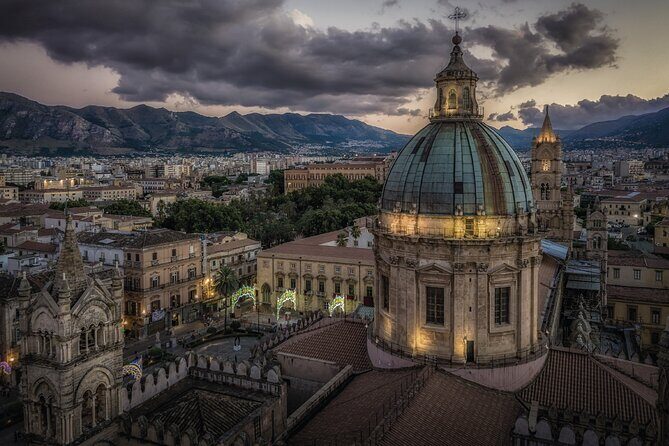
Your first stop is Chiesa di San Giovanni degli Eremiti, part of the UNESCO route for Arab-Norman Palermo and the Cathedrals of Cefalù and Monreale. This church isn’t just impressive to look at. It’s a physical reminder that Palermo absorbed different cultures over time and kept the layers.
The site has a long religious record. It began as a monastery connected to Saint Hermes. During Muslim rule, it became a mosque. Later, Benedictines took over and the church became a major religious center, with the abbot even serving as the King’s confessor. That’s the kind of context you’ll appreciate most when you’re actually in front of the building, not reading it later back at your apartment.
Time allotment is about 25 minutes, and the ticket for the church is not included (listed at €7). If you’re short on time, aim to focus on the exterior character first and then step in to catch the main interior feel. If you’re the slow-and-curious type, you’ll probably want more time, but the route itself keeps you moving efficiently.
Norman Palace (Palazzo dei Normanni): oldest royal palace vibes, plus underground surprises
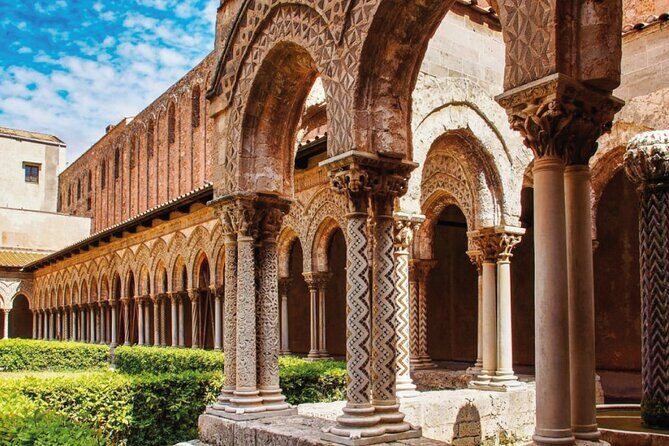
Next up is the Norman Palace, also called the Royal Palace. This is described as the oldest royal palace in Europe, and the important thing for your visit is that it sits on older ground. The palace is built on remnants going back to the Punic-Roman period.
Even better: there are underground areas you can visit where you might see remains connected to early Punic settlements. That’s a rare chance in Palermo to connect the visual grandeur of the palace to the deeper timeline beneath it.
You’ll have about 2 hours here, and the ticket is not included (listed at €17). Two hours sounds like a lot for a stop on a walking day, but the palace is one of the most historically layered places in the city. If you rush, you’ll miss how the building evolved and how the space was used.
If you want a smart strategy: when you arrive, take a minute to reorient yourself with the palace layout, then decide whether you’re going to prioritize the main areas or the underground portions more heavily. The audio guide should help you know where to spend attention.
Palermo Cathedral: Byzantine, Islamic, and Latin in one stop
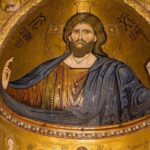
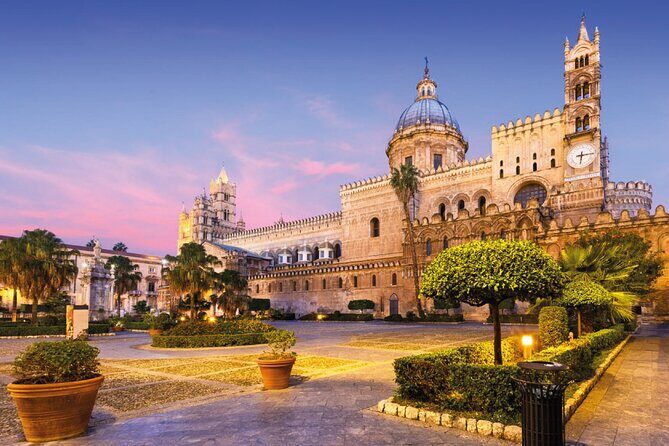
Then you reach Cattedrale di Palermo. This cathedral is UNESCO-recognized and known for combining Byzantine, Islamic, and Latin elements. In other words, the building isn’t just one style. It’s Palermo’s complicated story, shown in architecture.
It also works as a practical sightseeing anchor. The cathedral is an active worship space, and it houses the Diocesan Museum and a Chapel with the relics of Santa Rosalia, the patron saint of Palermo. It also includes tombs of the Norman kings.
Your time here is about 25 minutes, and the data says the admission ticket is free. That’s a big deal for value. Even if you don’t go into every possible pocket of the complex, you can still get a lot from the main cathedral experience without shelling out extra money.
If you love details, you’ll like having the audio guide narrate what you’re seeing, especially because the mix of styles can be subtle if you’re not told what to look for. If you’re more into “look, appreciate, move on,” 25 minutes is enough.
Teatro Massimo: the big opera house stop (plan for the ticket)
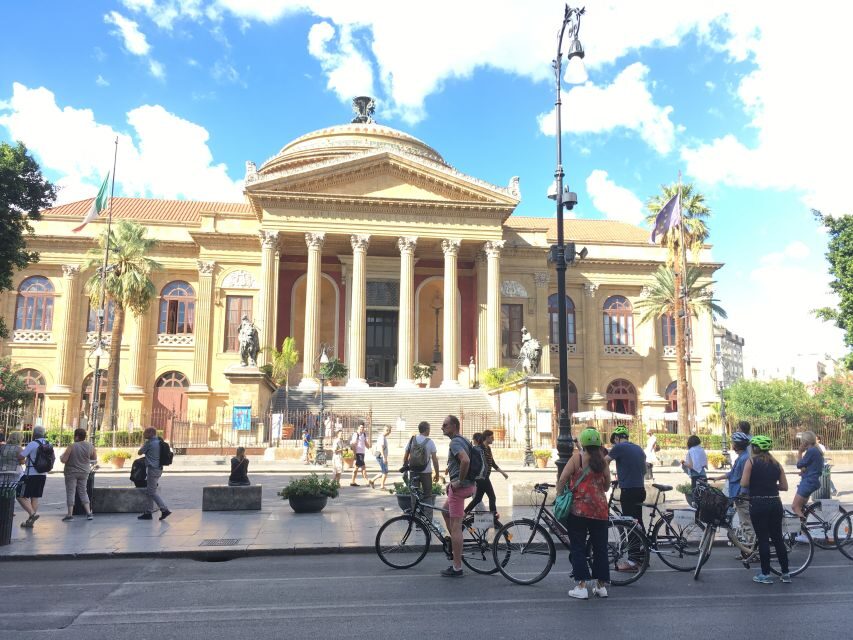
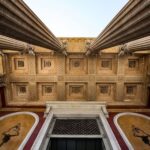
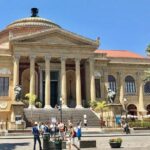
After the cathedral-and-palace intensity, you get a change of pace at Teatro Massimo. This is the largest opera house in Italy and the third in Europe, and it’s placed right where the old city meets the northern expansion.
The building is neoclassical and designed by Giovanni Battista Filippo Basile. It’s a stop that works even if you’re not an opera person. Opera fans will appreciate the scale. Non-fans will appreciate that it’s one of the city’s clearest “why Palermo matters” landmarks.
Time allotment is about 1 hour, and the ticket is not included (listed at €12).
Practical thought: this is one of the stops where you should decide early if you want to go inside. The exterior and square-area experience can still be worthwhile, but if you want the interior or guided views inside, budget the €12 and don’t treat it as a quick photo break.
Other guided tours in Palermo


Quattro Canti and Piazza Pretoria: city geometry and a fountain with a name
Now you shift into Palermo’s street-corner brain. The stop Quattro Canti (also known as Piazza Villena, as shown in the local name) is all about city design.
This intersection was created in the 17th century when Via Maqueda (commissioned by the viceroy, taking his name) met the already existing Via Vittorio Emanuele, also called the Cassaro. That crossing determined how Palermo was divided into four districts called “Mandamenti.” When you understand that, the street layout stops feeling random.
Time allotment is about 15 minutes, and it’s free.
Then you head to Piazza Pretoria, one of the most famous squares in the historic center. It’s also known as Piazza della Vergogna (Square of Shame) because of the fountain in the middle. That naming is the kind of detail you might miss if you’re only snapping photos, but once you hear the reference, the square becomes more than an open area.
Time is about 15 minutes, also free. This is a nice break point in the day because it gives you time to stand still, look up, and reset before the market and neighborhoods.
La Vucciria market and La Kalsa neighborhood: where Palermo shows up for real
If you want Palermo to feel like a city, not a museum, this is where it happens.
La Vucciria
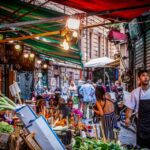
You’ll visit La Vucciria, Palermo’s historic market scene. It’s located in the Loggia district between Via Roma, Piazza San Domenico, and Via Vittorio Emanuele.
The guide includes why it’s called La Vucciria: the name traces back to French boucherie, meaning butcher’s shop, since meat was originally sold here. That’s a small detail, but it adds meaning when you’re looking at the street-market setup and imagining how it worked historically.
Time here is about 25 minutes, and it’s free.
A practical tip: keep your phone secure. Markets attract pickpocket opportunities in many cities, even when you’re not looking for them, so move with normal city-smart habits.
La Kalsa
After the market energy, you shift to La Kalsa, one of Palermo’s oldest neighborhoods dating back to the era of Islamic domination. The neighborhood keeps an oriental atmosphere, and the guide points you to monuments in Arab-Norman style.
Time here is about 15 minutes, and it’s free.
This short stop is perfect if you want a taste of the neighborhood without turning your day into a wandering marathon. If you fall in love with the feel of La Kalsa, you’ll know right away you might want to return later.
Palazzo Abatellis and the Majolica museum: art in tile form
Two final stops bring you away from churches and streets and into art and objects.
Palazzo Abatellis
Palazzo Abatellis sits at Piazza Magione and is a 15th-century building originally made for Francesco Abatellis, a Sicilian nobleman. It was designed by Matteo Carnilivari and combines Gothic elements with Renaissance influences.
You’ll have about 1 hour here, and the ticket is not included. The listing doesn’t give a price in the details you provided, so treat this as a pay-at-entry situation and check the current cost when you arrive.
Museo Delle Maioliche Stanze Al Genio
Then comes the tile heaven: Museo Delle Maioliche Stanze Al Genio. This is a private collection spread across eight rooms. It’s divided by era and by geographical origin.
The tiles are mostly from Campania and Sicily, spanning the 15th to 19th centuries. The guide highlights that these tiles were used for floors in noble and bourgeois homes. That matters because it changes how you see “decoration.” It’s not only pretty surfaces; it’s everyday elegance inside real houses.
Time here is about 1 hour, and again the ticket is not included in the details provided.
If you’re on the fence about this stop, think about this: Palermo is full of ornate architecture, but seeing the design language in tile form gives you a different kind of appreciation. If tiles make you smile, you’ll probably want the full hour.
Price and value: what you pay for, and what you still need to buy
The tour price is $7.21 per person, and that includes the heavy work: the audio-guide and text in multiple languages, the tips for what you’re seeing, the local restaurant advice, and the Google Maps connection to keep your route clean.
What’s not included is a set of key admissions. From the paid items you have listed:
- Chiesa degli Eremiti: €7
- Palazzo dei Normanni (Norman Palace): €17
- Teatro Massimo: €12
That’s about €36 in total for those three ticketed stops, not counting anything else. Some other sites are marked free, and two final museum-style stops show tickets not included without a price listed.
So the value equation looks like this: if you plan to visit the major ticketed sites anyway, the $7.21 feels like you’re paying for the route intelligence and the storytelling layer, not for the ticketed access. If you skip multiple ticketed interiors, you might feel the tour is more of a guided-self-walk for free sights. Either way, it can still be useful, because the route order helps you see a lot in one day without wasting time.
Also, the guide structure encourages you to pace yourself. One of the most praised aspects is that the tour helps you visit important sights efficiently while still letting you move at your own rhythm. That’s exactly what you want in a city like Palermo, where one wrong turn can cost you time and where locals don’t always run on a predictable schedule.
Who this Palermo walk is best for
This works well if you:
- Like self-paced sightseeing and don’t want to wait for a group
- Want context for what you see, not just photo stops
- Are comfortable using a smartphone and following directions on Google Maps
- Want a day that balances famous landmarks with neighborhoods and market life
It may be less ideal if you:
- Hate phone-based travel tools or your internet access is unreliable
- Prefer a live guide who can answer questions on the spot
- Don’t like walking for about 6 to 7 hours with multiple stops
One last thing: wear good shoes. Palermo’s streets can be uneven and you’ll walk enough that comfort matters more than style.
Should you book this Palermo walking tour?
If you want a smart, low-cost way to get your bearings and understand what you’re seeing while you walk, I’d say yes. The combination of audio + written explanations, the Google Maps support, and the way the route mixes UNESCO-level monuments with places like La Vucciria and La Kalsa make it a strong deal for the price.
I’d be cautious only if you know your phone setup can’t handle it. If you’re worried about passwords, login steps, or weak connectivity, test the guide early and keep a battery pack handy. With that in place, this is a solid way to spend a full day in Palermo without feeling rushed or stuck.
FAQ
How long is the Palermo walking tour?
It runs about 6 to 7 hours (approx.).
Is this a live guided tour or self-guided?
It’s a self-guided digital experience. You use the mobile ticket and the digital audio/written guide on your smartphone as you walk.
What language options are available for the audio and text?
The guide is available in English, Spanish, Italian, German, and French.
Does the tour price include tickets for major monuments?
Not always. Some entries are free, but several are not included, including Chiesa degli Eremiti (€7), Palazzo dei Normanni (€17), and Teatro Massimo (€12).
Which stops are listed as free?
Cattedrale di Palermo is marked free, and Quattro Canti, Piazza Pretoria, La Vucciria, and La Kalsa are also marked free.
What do I need to use the digital guide?
You’ll need a smartphone with an internet connection to use the digital guide. Details for activating it are provided in your voucher.
Where does the tour start and where does it end?
It starts at the Church of Saint John of the Hermits on Via dei Benedettini, 16, Palermo, and it ends at the Rooms at the Museum of majolica Genius on Via Giuseppe Garibaldi, 11, Palermo. You can choose your ending point when using the guide.