REVIEW · PALERMO
Palermo: the city from the sea
Book on GetYourGuide →Operated by SEICA BOAT · Bookable on GetYourGuide
Palermo looks different when you watch it from water. This small-group boat outing shows how Panormus became todays Palermo, the all-port city, while you glide past the coastline’s big-name landmarks. I especially like the views from the sea and the fact that the captain keeps things comfortable and easy. One thing to consider: this is time on the water, so if you’re sensitive to waves or want a perfectly dry outing, plan around the sea and weather.
You’re not just sightseeing from a distance. You’ll connect the dots from Monte Pellegrino and Santa Rosalia down to places tied to Palermo’s maritime life, then you finish with a proper Palermitan-style aperitif.
In This Review
- Key things that make this Palermo-from-the-sea tour work
- Why Palermo from the sea changes how you see the city
- Getting on board at Cala Marina and meeting the pace of the trip
- Monte Pellegrino and Santa Rosalia: the mountain behind the port
- Castello Utveggio from the water: a fortress with context
- Porta Felice: city gate energy, seen at sea level
- The maritime side you rarely notice on foot
- Villa Igiea and the Palazzina dei Quattro Pizzi: the coast gets fancy
- The traditional Palermo aperitif: cannolo, almond pastries, and Sicilian wine
- The sea moment: taking a dip if conditions allow
- Price and value: what $101.96 buys you
- Who should book this boat tour of Palermo
- Should you book this Palermo-from-the-sea tour
- FAQ
- How long is the Palermo from the sea experience?
- How much does it cost per person?
- Where does the tour depart from?
- Is an aperitif included?
- Will I be able to swim?
- What should I bring?
- What languages are offered?
- Is it wheelchair accessible?
Key things that make this Palermo-from-the-sea tour work
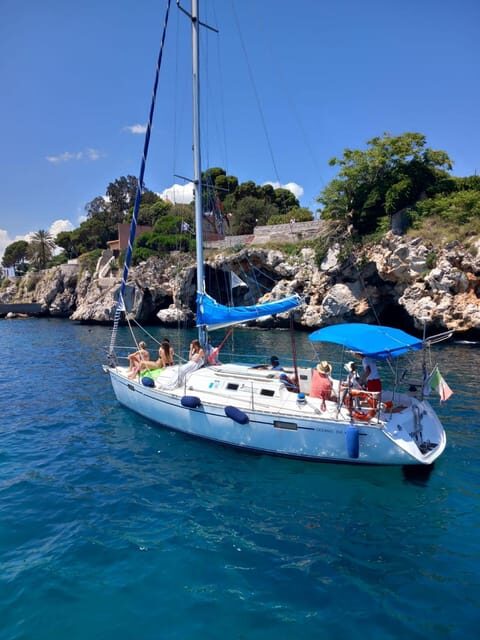
- A small group (up to 6) means you’re not lost in a crowd while you take in the coastline.
- 3 hours on the water gives you time to actually see details, not just pass by them.
- Landmarks from the sea include Castello Utveggio and Porta Felice, plus more.
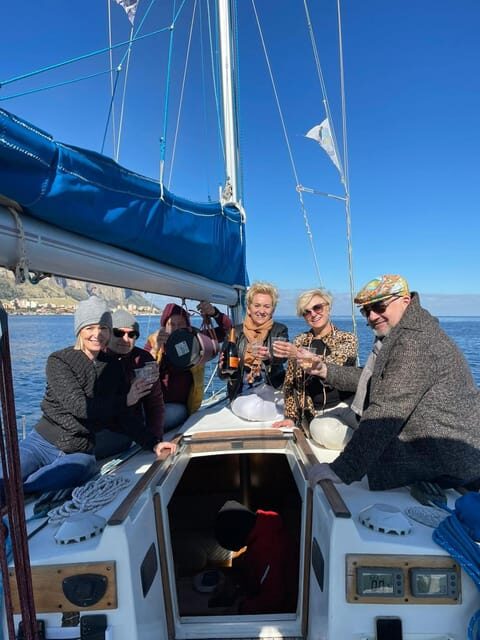
- A real local aperitif with cannolo tasting, almond pastries, and Sicilian wines.
- Possibility of a dip (weather permitting) adds a beach-day feel to a city tour.
- Comfort-focused captain and a calm pace help the ride feel like a tour, not a commute.
Why Palermo from the sea changes how you see the city
Palermo has always been a city pulled by the sea. Even the name Panormus hints at that: it reads like “all-port,” built for arrivals, trade, and the mix of cultures that came with it.
On this tour, you get the coastline first, then the stories. You’ll hear how peoples across centuries shaped Palermo, from early settlers around Monte Pellegrino to Greeks, Romans, Byzantines, Phoenicians, Arabs, Spanish, and Normans. The effect is simple: you understand the city as something made by contact, not just something you walk through.
I also like that you’re learning while you’re moving. There’s no long, stuck-in-one-place segment where your brain needs a break. The sea acts like your guide between big stops.
Other city tours we've reviewed in Palermo

Getting on board at Cala Marina and meeting the pace of the trip
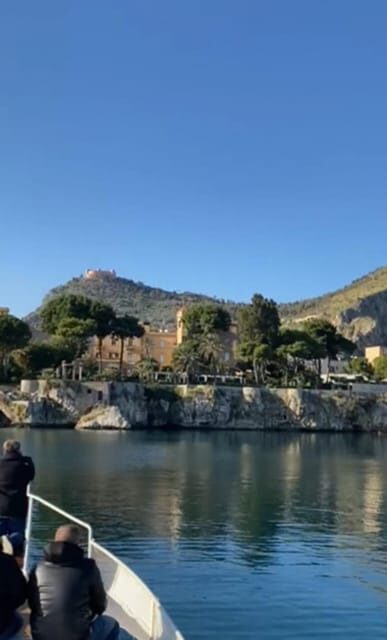
The experience starts at Cala marina, with the boat boarding from Seica boat. This matters because you’re not starting deep in the historic center, where you can burn time walking and fighting for position. You’re starting where Palermo opens out to water.
This ride runs about 3 hours, with sailing built in and then returning to Seica boat. That timing is a sweet spot for most people: long enough to enjoy the coastline, but not so long that it turns into a half-day endurance test.
Because the group is limited to 6 participants, you should feel the difference right away. Less noise. Less waiting. More chance to ask quick questions while you’re in motion and the captain is explaining what you’re seeing.
Monte Pellegrino and Santa Rosalia: the mountain behind the port
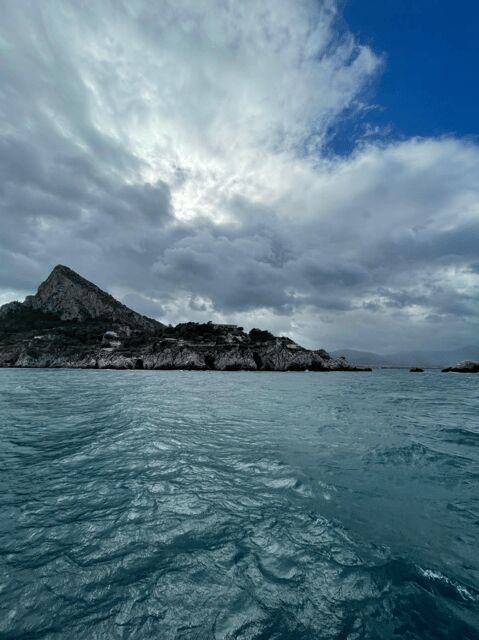
One of Palermo’s most famous anchors is Monte Pellegrino, which rises from the sea and shapes the entire view. Early settlers took root here as early as the Bronze Age, and the mountain became tied to Palermo’s identity.
The tour connects this mountain to the shrine of Santa Rosalia, Palermo’s patron saint. The shrine sits inside a cave at the top of the mountain, which makes Santa Rosalia feel less like a statue and more like a place you can imagine.
Even if you’ve seen photos of Monte Pellegrino before, watching it with the coastline around you helps. It’s easier to understand why people chose this spot when you can see the sea and the shape of the hills together.
Castello Utveggio from the water: a fortress with context
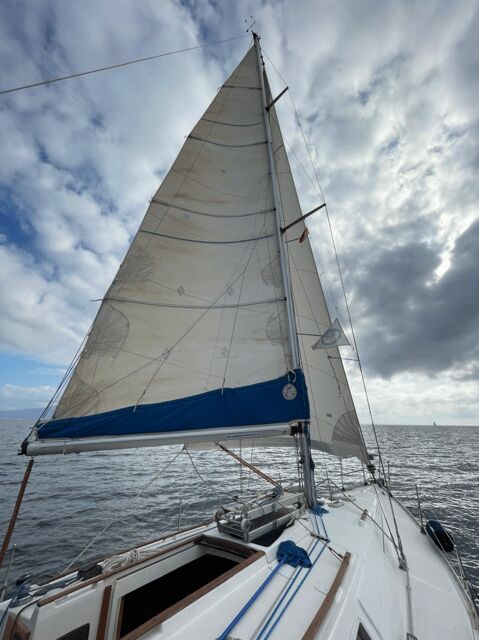
As you sail, you’ll pass views associated with Castello Utveggio. Castles can feel like isolated sights when you’re walking through a city. From the sea, it reads differently: it looks like part of how Palermo guarded its approaches.
That’s why this stop-by-viewpoint style works. You’re not just collecting names. You’re seeing why a structure like this could matter—control of sightlines, protection of the coast, and a reminder that Palermo always had to watch its waters.
If you’re a photo person, this is the kind of spot that rewards patience. Let the boat angle you toward the right perspective, then take the shot when the building and coastline align.
Porta Felice: city gate energy, seen at sea level
You’ll also see Porta Felice from the water. City gates often get explained as entrances, but the sea-level view gives you the practical angle: Palermo’s entrances were not only streets. They were also journeys by water, with ships and travelers arriving first, then moving inward.
From the boat, Porta Felice can feel more imposing than it does at street height. You get that “this is what the city looked like to arrivals” feeling, and it changes the story you carry when you later walk through town.
Keep an eye on how the coast curves as you approach views like this. Palermo’s shape helps explain why some landmarks feel close and others feel far. That’s useful for orientation if you plan to explore afterward.

The maritime side you rarely notice on foot
Palermo’s nickname as the all-port city isn’t just trivia. It shows up in the way the city developed along the shore.
On this tour, you’ll hear about places tied to maritime and fishing heritage, including the Tonnare Florio and Bordonaro. If you’ve never paid attention to tuna-related structures in Sicily, this is where your understanding starts to click. These sites signal how industry shaped daily life, not just the romantic parts of travel.
The names also matter. Florio and Bordonaro aren’t generic labels; they’re reminders that wealth and work were tied to the sea. You’re learning why the coast had purpose beyond scenery.
If you care about the “how did people live here?” side of travel, this segment is a strong match. It gives you a different lens than the usual walking itinerary.
Villa Igiea and the Palazzina dei Quattro Pizzi: the coast gets fancy
Then the tour shifts toward more glamorous sea-linked landmarks, including Villa Igiea and the Palazzina dei Quattro Pizzi. This is where Palermo shows another face: not only a working port, but also a place for status, leisure, and big coastal presence.
Seeing these buildings from the water helps you understand scale. From the shore, you might underestimate how much these places dominate the viewpoint. From the boat, the distance becomes obvious, and you can tell how the sea was part of their identity.
I like that the mix isn’t random. You don’t just jump from fortress to villa like a checklist. The tour builds the arc: people take root, empires and cultures shape the city, the sea supports life and industry, and then wealthy Palermo turns the coast into a stage.
The traditional Palermo aperitif: cannolo, almond pastries, and Sicilian wine
The tour includes a traditional Palermo aperitif with local products. This is not an afterthought snack. It’s part of the experience because it ties food and drink to the places you’re passing.
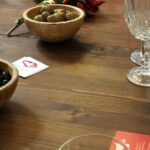
You’ll get a cannolo tasting plus almond pastries, along with sipping wines such as Zibibbo and Malvasia. If you’ve had cannolo before, this can still be a treat because the focus is on sampling and pairing with what you’re seeing around you.
I also think aperitif time is a smart pacing choice. After a few hours of viewing landmarks, your brain wants a slower moment. Food and wine let you reset while the coastline continues to roll by.
The sea moment: taking a dip if conditions allow
One of the most fun parts of this trip is the chance to take a dip, weather permitting. It makes the outing feel like half tour, half coastal break.
Since the details on exact swimming spots aren’t provided here, keep your expectations flexible. If the sea is calm and the captain can safely allow it, you’ll have that option. If not, you still get the core value: the sightseeing from the water plus the aperitif.
Practical tip: bring a towel, since that’s listed as something to pack. It’ll save you from scrambling at the end.
Price and value: what $101.96 buys you
At $101.96 per person, this isn’t the cheapest way to see Palermo. But it’s also not a big-deal splurge for what you get.
Here’s the value logic:
- You’re paying for a 3-hour guided ride on the water, not just a viewpoint.
- The tour is small group (max 6), which typically means better attention and easier conversation.
- You get an aperitif included, with cannolo tasting, almond pastries, and wines like Zibibbo and Malvasia.
- You may also get a swim option, depending on conditions.
If you’re the kind of traveler who feels like standard tours rush you, the small group plus longer sailing time is the main selling point. You’re buying time, comfort, and a different perspective.
Who should book this boat tour of Palermo
This experience is a great fit if you want:
- A sea-first view of Palermo’s landmarks instead of another walking-only plan
- A tour with a small group pace (up to 6)
- Time to enjoy an aperitif as part of the schedule
- The chance to cool off with a dip if conditions allow
You might not love it as much if you’re looking for heavy, on-land museum time. This trip is about the coast, the landmarks seen from water, and learning the city through that angle.
Should you book this Palermo-from-the-sea tour
I’d book it if you want a different way to understand Palermo fast: the sea perspective, the mix of cultures through time, and the practical addition of an aperitif and possible swim.
Before you go, think about these two choices:
- Are you happy spending 3 hours on the water? If yes, the views and the comfort-first captain approach make it feel worth the price.
- Do you want food included? The cannolo tasting, almond pastries, and Sicilian wines are part of why this tour feels like an experience, not just transportation.
If your goal is to see Palermo as a port city with real maritime context, this is the kind of outing that pays off later when you walk streets and suddenly recognize what you learned from the sea.
FAQ
How long is the Palermo from the sea experience?
The duration is 3 hours.
How much does it cost per person?
The listed price is $101.96 per person.
Where does the tour depart from?
It departs daily from Cala marina, with boarding from Seica boat.
Is an aperitif included?
Yes. An aperitif with local products is included.
Will I be able to swim?
You may take a dip, weather permitting.
What should I bring?
Bring a towel.
What languages are offered?
The host or greeter speaks Italian and English.
Is it wheelchair accessible?
Yes, the experience is wheelchair accessible.