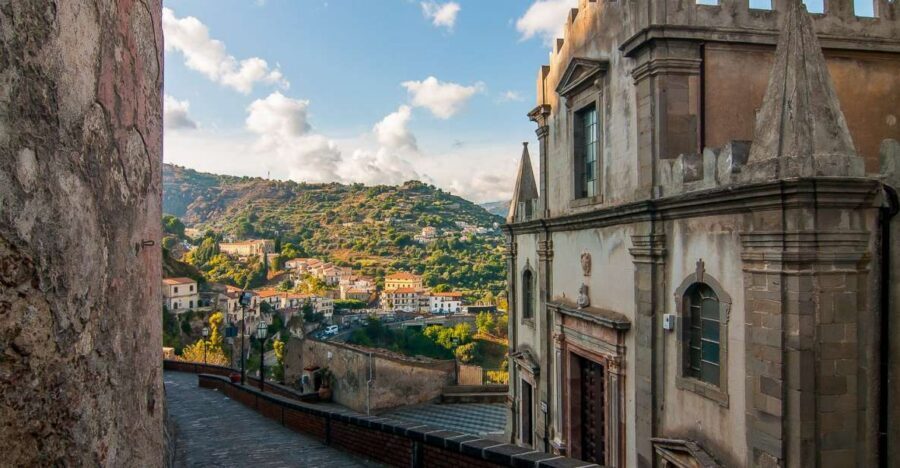
Palermo hits you fast if you know where to look. This short walking tour strings together the city’s Palermo Baroque highlights, a Norman-era church, and one of the best market-stops in the center—without dragging on for a half-day. I like that you get context for what you’re seeing (from square to church to market), and I also like the small group size capped at 10. One thing to plan around: a few big sights charge extra on site, so your total cost can move a bit depending on which churches and indoor stops you choose.
You start at Piazza Pretoria, then work your way through the historic core in about 2 to 3 hours at a steady walking pace. The tour is in English, uses a mobile ticket, and runs near public transport—good for fitting into your first day or a quick afternoon. With a route that can adjust depending on which sites are open (La Martorana is the example called out), you’ll want to stay flexible if the schedule shifts.
In This Review
- Key highlights you’ll feel on the ground
- Starting in Piazza Pretoria: where the Baroque mood is set
- Quattro Canti and the seventeenth-century square lesson
- Santa Caterina d’Alessandria cloister time (and what costs extra)
- La Martorana (Santa Maria dell’Ammiraglio): Norman and Baroque in one church
- Giudecca and the Jewish Quarter area: one neighborhood story at street level
- Chiesa del Gesù: marble drama that’s worth the effort
- The oldest main street stroll and why it connects everything
- Cattedrale di Palermo: Norman kings tombs and the Santa Rosalia chapel
- Capo Street Market: the sensory center of the city
- Teatro Massimo: the opera giant you can spot in minutes
- Price and value: is $54.42 a fair deal?
- Who this tour fits best
- Should you book Discover Palermo?
- FAQ
- How long is the Discover Palermo tour?
- Is the tour in English?
- What does the tour cost?
- Where does the tour start and end?
- Is admission included for all stops?
- Can I visit La Martorana during the tour?
- Is the tour suitable for most travelers?
- How big are the groups?
- What if the weather is bad?
Key highlights you’ll feel on the ground
A tight historic loop covering major squares, churches, and the market in just a few hours
Palermo Baroque everywhere from white marble details to dramatic marble church interiors
Norman-meets-Baroque payoff at Santa Maria dell’Ammiraglio (La Martorana), when open
A real neighborhood story in the Giudecca (Palermo’s Jewish quarter area)
Capo Street Market for food-sensing fruit, fish, spices, and everyday energy
Starting in Piazza Pretoria: where the Baroque mood is set
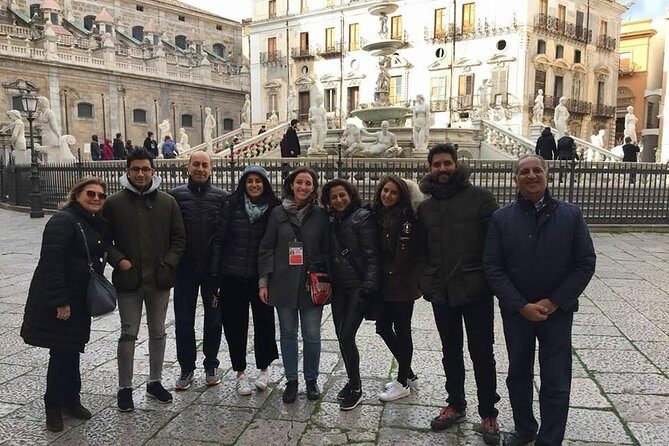
Your tour begins at Piazza Pretoria, a stunning square where you’re instantly in the mood for Palermo’s love of ornate stonework. Keep your eyes on the fountain of shame in white Carrara marble—it’s famously beautiful, and the setting makes it easy to understand why people remember this square.
From there, the tour does something smart: it helps you read the city as a system. You’re not just hopping between landmarks; you’re learning why squares, town buildings, and churches sit where they do, and how styles overlap across centuries.
You’ll also see the surrounding power markers: Palazzo delle Aquile and the town hall, plus the baroque church of Santa Caterina d’Alessandria nearby. Even if you don’t go inside immediately, the architecture around you gives you a map for later stops.
If you're still narrowing it down, here are other tours in Palermo we've reviewed.
Quattro Canti and the seventeenth-century square lesson
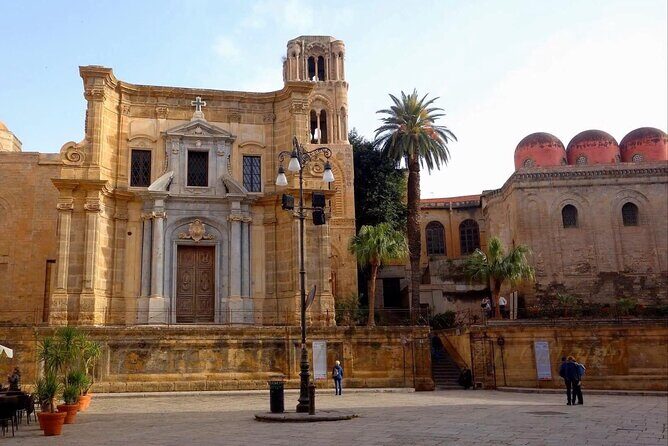
Next comes Quattro Canti, described as the center of the historic core and a classic seventeenth-century baroque square. This is one of those places where the buildings frame the street like a stage set. It’s compact, photogenic, and easy to grasp in a few minutes.
This stop is short for a reason. It works like a visual pause: you see the geometry, then you’re off again to churches and neighborhoods. If you’ve been walking on your own and feel like Palermo is a blur, Quattro Canti helps you reset.
It’s also a useful stop for photos without overthinking it. Stand at an angle, let the buildings do the work, and you’ll capture that baroque “street-canyon” look without needing a ladder or perfect timing.
Santa Caterina d’Alessandria cloister time (and what costs extra)
Santa Caterina d’Alessandria is both a church-area visit and a chance to slow down in a cloister setting. You’ll look at the cloister and the monastic confectionery inside the former Dominican monastery—an interesting contrast to the loud streets just outside.
There’s a practical catch: the baroque church visit is possible, but it’s not included and you may need a ticket paid on site. The same goes for other church interiors later, so go in expecting that you’ll choose which indoor spaces you want to pay for.
Even without buying the paid entry, the cloister portion still pays off because it changes your pace. You go from open square light into quieter stone corridors. That shift is part of what makes a short tour feel complete.
La Martorana (Santa Maria dell’Ammiraglio): Norman and Baroque in one church
Santa Maria dell’Ammiraglio, also known as La Martorana, is the tour’s Norman-and-Baroque moment. It’s presented as a unique example of safe Norman and Baroque art, and it’s one of Palermo’s most beautiful churches.
There’s also a real-world note you should take seriously: La Martorana is visitable only when the site is open. The tour says it can propose an alternate route or add another church in response. So if you’re the kind of person who hates “maybe” plans, keep your expectations flexible.
When you do get inside, treat it like a style comparison exercise. You’ll see how different periods layered their tastes instead of removing each other. That’s the Palermo trick: the city doesn’t erase; it stacks.
Giudecca and the Jewish Quarter area: one neighborhood story at street level
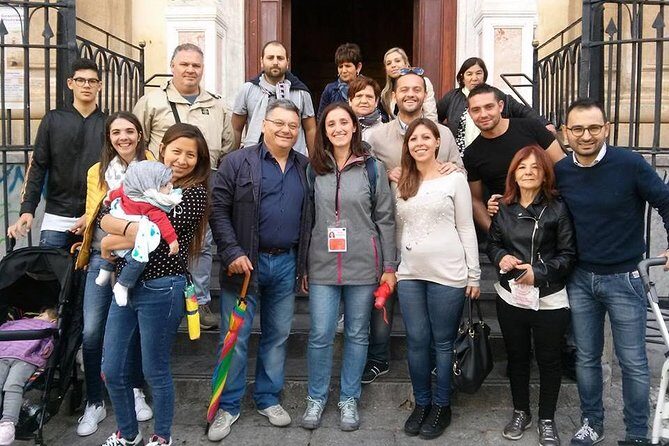
The tour steps into the Giudecca, described as Il Quartiere Ebraico, tied to the Meschita neighborhood where Palermo’s Jewish community lived until their expulsion in 1493. This stop is short, but it matters because it grounds Palermo’s art in people, not just buildings.
Walking here helps you notice how history can sit in plain view. Even when streets look like today, the guide’s framing gives them sharper edges—like you’re seeing the same block through different time lenses.
The practical value: after squares and churches, you get a neighborhood beat. It keeps your tour from turning into a museum-only afternoon where everything feels detached from real life.

Chiesa del Gesù: marble drama that’s worth the effort
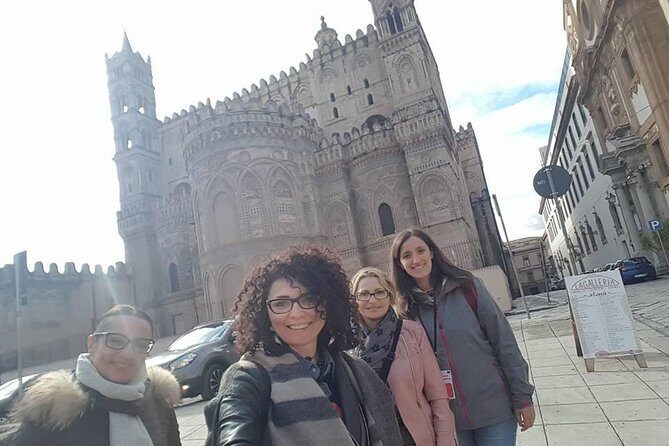
Next you’ll reach Chiesa del Gesù, called an astonishing example of Palermo baroque. The big hook is the marble decoration richness—this is the kind of church where the details pull your eyes in circles.
Again, interiors are not included by default. Entrance is paid by customers, so decide ahead of time how many paid entries you want. If you’re planning a church-heavy trip, Chiesa del Gesù is the kind of stop you won’t regret paying for.
For the visit itself, don’t rush. Give yourself time to look up and then slow down at face height. Baroque church decoration can feel like visual noise until you pick a few focal points. Once you do, it turns into a controlled kind of chaos.
The oldest main street stroll and why it connects everything
Between stops, you’ll walk along the city’s most ancient and important street, described as lined with noble palaces and shops of Sicilian craftsmanship. This part is more than a transit section. It’s how you understand Palermo’s center as a living, working place.
It also helps you connect the dots between the formal squares and the food market. Markets don’t live in isolation; they’re fed by the same streets that bring visitors and trade.
Keep an eye out for craft shops and the everyday storefront rhythm. If you’re trying to shop responsibly and skip tourist-only stuff, this is often where you’ll get the most useful browsing.
Cattedrale di Palermo: Norman kings tombs and the Santa Rosalia chapel
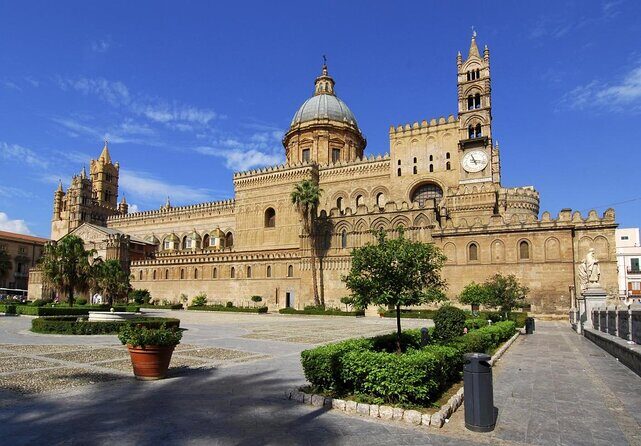
Cattedrale di Palermo is where the tour turns from baroque style to historical weight. The cathedral is described as the most important church in the city, shaped by different styles and cultures. It’s also the place to see the tombs of the Norman kings and the silver chapel of Santa Rosalia.
This is one of the easiest stops to justify as a “must” because the tour frames it around specific, memorable elements—tombs and the silver chapel. You’re not guessing what you came for. You have a clear list in your head as you walk in.
One more practical angle: this cathedral is a good place to slow down after heavier street walking. The architecture and the stated focal points make it easier to navigate your attention without feeling lost.
Capo Street Market: the sensory center of the city
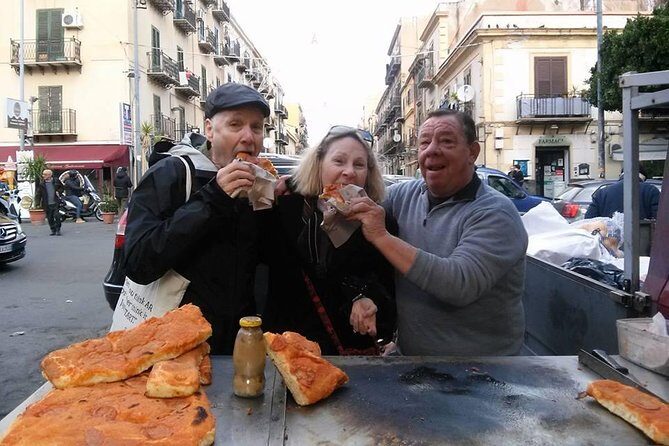
Capo Street Market is described as a historical food market with fruit, vegetables, fish, and spices—basically the soul of Palermo. This is where the tour becomes more than sight-seeing. It’s a chance to see how people shop and what the city smells like on a normal day.
In the guides’ street-food style coaching (you’ll hear recommendations like what to look for in the market), I love how this stop gives you an easy win: you can sample without needing to research for hours first.
If you’re the type who likes to eat while you travel, this is where you can turn the tour into a meal. Even if you don’t buy much, just walking the stalls gives you a better read on Palermo than any brochure.
Teatro Massimo: the opera giant you can spot in minutes
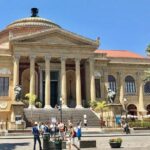
The tour finishes with a look at Teatro Massimo, the opera theater described as the most beautiful in Sicily, the largest in Italy, and the third in Europe. It’s neoclassical in style, and it makes a dramatic endpoint because it feels like Palermo’s cultural ambition in stone.
Entrance here is not included, so you’ll be deciding whether to treat it like a photo stop or a ticket stop. Either way, it’s a solid capstone: you’ve gone from baroque churches and market streets to a major performing-arts landmark.
Also, it helps you place your own future plans. If you’re in town long enough to catch a show, you now know where to aim your tickets.
Price and value: is $54.42 a fair deal?
At $54.42 per person for a 2 to 3 hour guided walk, this tour is priced like a true “first introduction” experience. The small-group cap at 10 is a meaningful value driver here because you’ll spend more time with the guide, less time chasing the group.
The other value point is the mix of free admission stops and paid optional interiors. Several stops are listed as free (Piazza Pretoria, Quattro Canti, Giudecca, Cattedrale, and Capo Street Market), while major paid options include certain churches and Teatro Massimo. That structure gives you control: you can keep costs lower by skipping paid entries, or you can go all-in if churches are your priority.
The English-only format is also a plus if you want clear explanations without guessing. Just do a quick mental note: the more you enter paid interiors, the more your final spend rises. Still, you’re paying for the ability to understand what you’re seeing, not just for walking between stops.
Who this tour fits best
This tour works especially well if you want Palermo Baroque highlights without spending the day doing museum logistics. It’s a strong fit for:
- First-time visitors who need orientation fast
- People who like church interiors but can handle a few paid entry choices
- Travelers who want both architecture and street-market life in one route
- Families and mixed-age groups, since the route is active but short
If you hate walking, or if you want every single interior at no extra cost, you might find the paid-entry parts a letdown. The good news is the route still gives meaningful outdoor context at every stop even when you skip an interior.
Should you book Discover Palermo?
If your goal is a quick, high-impact tour of central Palermo, I’d book it. You get an efficient route through squares, churches, a neighborhood history stop in Giudecca, and the Capo Street Market that feels like the city’s heartbeat. With the average rating at 4.8 and a strong recommendation rate, this is the kind of guided walk that tends to land well when people want value for a short time.
I’d only hesitate if you’re strict about avoiding paid entrances, or if your plans can’t handle a “site may be open” situation for La Martorana. If you can stay flexible, this is a smart way to get a real feel for Palermo’s layers—baroque drama outside, Norman-and-Baroque surprises inside, and everyday life in the market.
FAQ
How long is the Discover Palermo tour?
It runs about 2 to 3 hours.
Is the tour in English?
Yes, it’s offered in English.
What does the tour cost?
The price is listed as $54.42 per person.
Where does the tour start and end?
It starts at Piazza Pretoria (90133 Palermo PA, Italy) and ends at Piazza Giuseppe Verdi.
Is admission included for all stops?
No. Some major sites and church interiors are listed as not included, meaning you may need to pay entry on site.
Can I visit La Martorana during the tour?
La Martorana (Santa Maria dell’Ammiraglio) is visitable only when the site is available for visits. If it’s not, the tour may offer an alternative or add another church.
Is the tour suitable for most travelers?
Yes, it’s marked as suitable for most travelers.
How big are the groups?
The tour has a maximum of 10 travelers.
What if the weather is bad?
This experience requires good weather. If it’s canceled due to poor weather, you’ll be offered a different date or a full refund.