REVIEW · PALERMO
Markets and Monuments: Walking Tour in the Center of Palermo
Book on Viator →Operated by Cavallaro Fabrizio · Bookable on Viator
Palermo is a city you feel on foot. This walk is a smart mix of big monuments and everyday street life, with Capo Street Market as the perfect starter and Chiesa del Gesù delivering some seriously eye-catching interior color. Two things I like a lot are the UNESCO-linked stories you can actually see, and the chance to snack while you learn. The only real drawback to plan for is heat—this is still a walking tour, and you may want extra water stops.
For $39.91 and about 3 hours, you’re buying a guide-led path through central highlights, not just photos. It’s offered in English, uses a mobile ticket, and keeps groups small (up to 12 per booking, with a maximum of 18). One more practical note: you start at Piazza Vincenzo Bellini and finish in front of Santa Caterina church, about a 20-minute walk from the start.
In This Review
- Key Points You’ll Care About Before You Go
- Why This Palermo Walk Works in 3 Hours
- Piazza Bellini to Capo Street Market: The Food-City Start
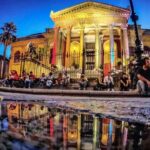
- Teatro Massimo: Italy’s Largest Opera House (and Why It Matters)
- Palermo Cathedral and the UNESCO Arab-Norman Connection You Can See
- Quattro Canti and Fontana della Vergogna: Baroque Meets Everyday Life
- Chiesa del Gesù, La Martorana, and St. Cataldo’s Red Domes
- What’s Included, What’s Not, and How to Budget Smartly
- Group Size, Pace, and Meeting-Point Tips That Save Stress
- Should You Book This Walking Tour?
- FAQ
- How long is the walking tour?
- What does the tour cost?
- Is the tour offered in English?
- Do I need tickets on my phone?
- What is included in the price?
- Are there any entrance fees?
- What should I wear?
- Where does the tour start and end?
- Can children join?
Key Points You’ll Care About Before You Go
- Capo Street Market first: a traditional food market stop that sets the tone for Palermo fast.
- UNESCO Arab-Norman context: you get named sites explained so the architecture makes sense.
- Big sights, short time: Teatro Massimo, Quattro Canti, the Cathedral area, and more in one route.
- A mix of free and ticketed entrances: some buildings are included at no extra cost, others aren’t.
- Food stops are optional but encouraged: you can grab classic snacks along the way.
- Watch the weather: pace is solid, but in hot conditions you’ll wish you had your own water rhythm.
Why This Palermo Walk Works in 3 Hours
This tour is built for first-time or mid-trip visitors who want structure without feeling trapped. In about 3 hours, you cover the kind of central Palermo you’d otherwise stitch together yourself—Cathedral area, major squares, and standout churches—while a guide helps you connect what you’re looking at to the city’s story.
At $39.91, the value comes from what’s included: a local guide, a professional guide, and even a port pickup option. You also get a mobile ticket, so you’re not hunting paper tickets in your pocket while you’re staring at Palermo buildings and trying to look confident.
The route is compact, but it’s still walking. If you’re sensitive to heat, plan for it. One review specifically flagged the hot weather and wishing for more water breaks, so I’d treat hydration as part of the plan, not an afterthought.
Other walking tours we've reviewed in Palermo

Piazza Bellini to Capo Street Market: The Food-City Start
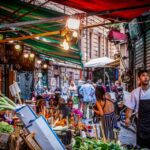
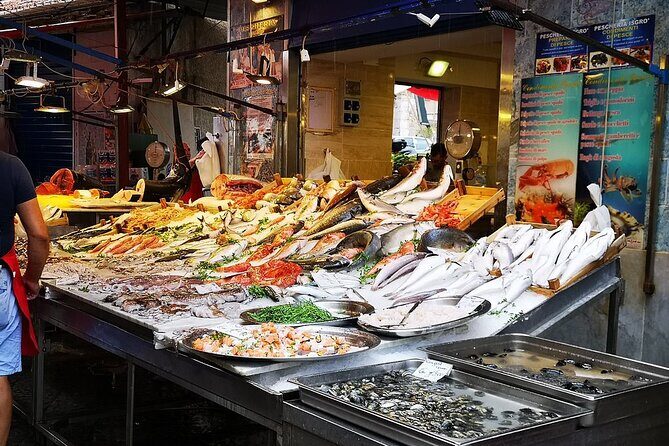
You begin at Piazza Vincenzo Bellini, then head straight into Capo Street Market. This is one of those stops that changes your mindset. Instead of monuments first, you get Palermo’s everyday pulse: typical Sicilian fruit, vegetables, and fish, all packed into a traditional market space.
What I like about starting here is how it trains your eyes. You notice color. You notice variety. You notice that Palermo culture isn’t something sealed inside churches; it’s out here, in produce, in chatter, and in food being part of daily life.
The market stop is short—about 20 minutes—and admission is free. That means you can get your bearings, ask questions, and then move on without feeling like you missed the rest of the tour.
Practical tip: wear comfortable shoes. Market floors and crowded lanes can be a little uneven, and you’ll want stability so you can keep looking up at details, not just where you step.
Teatro Massimo: Italy’s Largest Opera House (and Why It Matters)
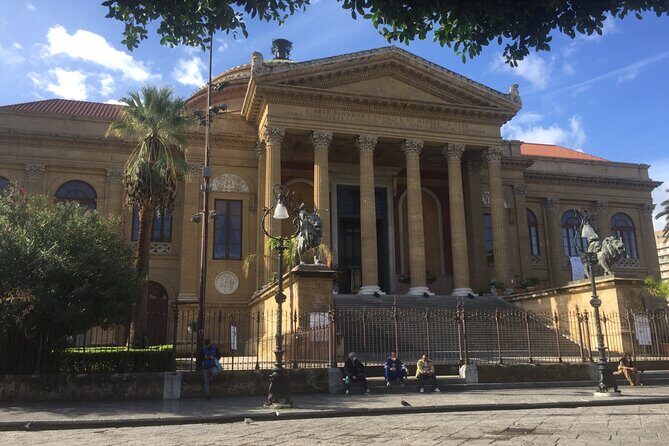
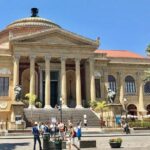
Teatro Massimo is the kind of building that makes you pause even if you’re not an opera fan. It’s the largest opera house in Italy, and the third one in Europe, built in 1875. Even if you mainly see it from the outside, the scale and the presence are hard to ignore.
This is a quick stop, around 15 minutes. Admission is not included, so if you want to go inside, you’ll need to budget for it separately. Still, the guide’s job here is valuable: they explain why Teatro Massimo feels legendary and how it fits into Palermo’s identity.
If you do have a museum-building itch, you might consider adding an internal visit later. But even without that, the exterior is impressive enough to justify the time.
If you’re traveling with limited energy, prioritize sights outside when the day is hot. This one gives you a big payoff with minimal time and minimal decision-making.
Palermo Cathedral and the UNESCO Arab-Norman Connection You Can See
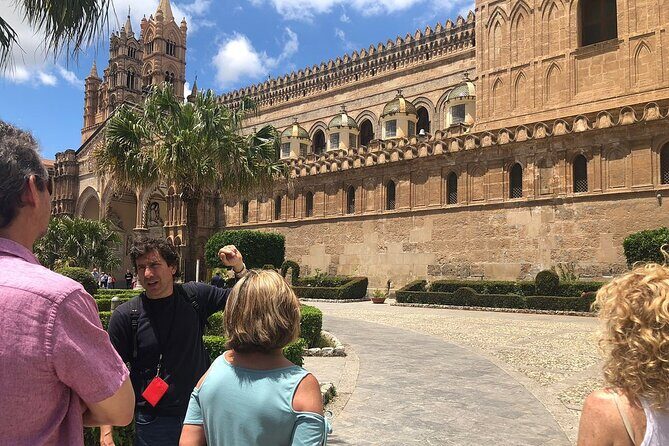
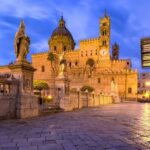
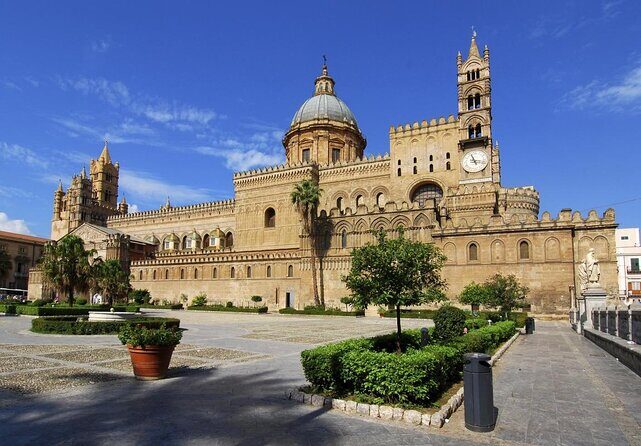
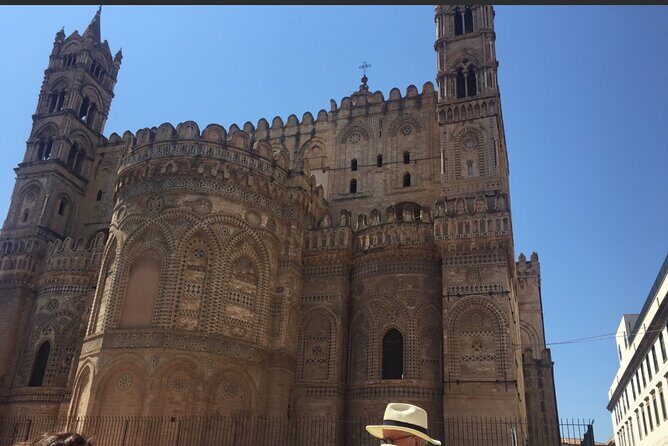
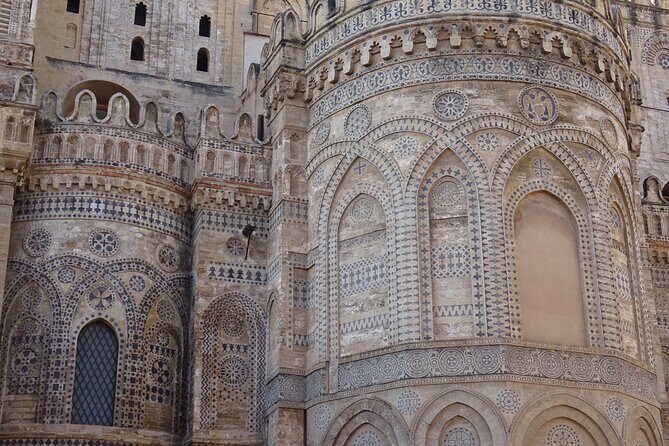
Next up is the Cathedral area—Cattedrale di Palermo, part of UNESCO’s Arab-Norman Palermo. This is one of those moments where a guide helps you understand what you’re actually seeing. Arab-Norman Palermo isn’t just a label; it’s a mix of influences that shows up in the architecture and the way the complex evolved.
This stop is about 20 minutes, and admission is free. You’ll also see elements inside, not just from a distance. Keep your eyes open for the hourglass on the church floor (clessidra). It’s the kind of detail that disappears fast if you’re only snapping pictures.
Why this matters: if you try to DIY this without context, you’ll still enjoy the Cathedral. But with a guide, the building becomes readable. You start noticing layers—how different periods left marks, and why UNESCO cares.
One word of caution: because it’s a major historic site, it can feel busy. Go slow, stand back when you need to, and don’t force your group forward if you’re trying to spot floor-level details.
Quattro Canti and Fontana della Vergogna: Baroque Meets Everyday Life
Quattro Canti—officially Piazza Vigliena—is a Baroque square built in the 17th century at the crossing of Palermo’s two principal streets: Via Maqueda and Corso Vittorio Emanuele. It’s quick, about 10 minutes, but it’s also one of those places where geometry and design do the talking.
I like Quattro Canti because it’s a visual “reset.” You come from church stone and market texture, and then suddenly you’re staring at a planned intersection that tells you Palermo was built to be seen in parts.
Right after that is Fontana della Vergogna, a monumental fountain in Piazza Pretoria. The fountain was built in Palermo in 1574, and it’s the kind of landmark that looks instantly important even before you know the story behind it. Admission is free here, so it’s pure sightseeing value.
If you’re the type who likes to learn by looking, this pairing works well. Quattro Canti helps you understand the city’s layout. Fontana della Vergogna helps you understand how Palermo uses art to mark space.
Chiesa del Gesù, La Martorana, and St. Cataldo’s Red Domes
Now you get into the church cluster that makes Palermo feel like a timeline you can walk through.
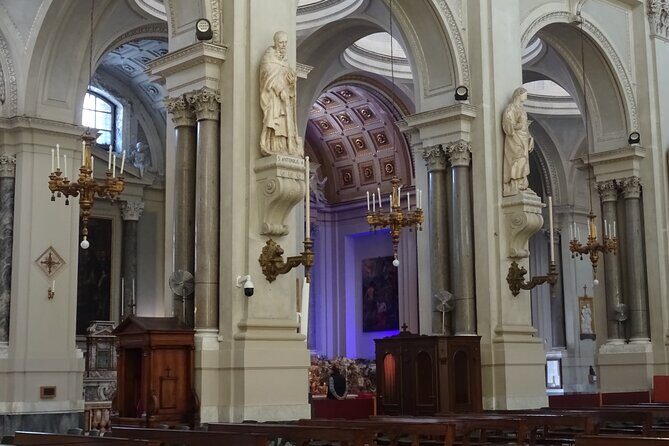
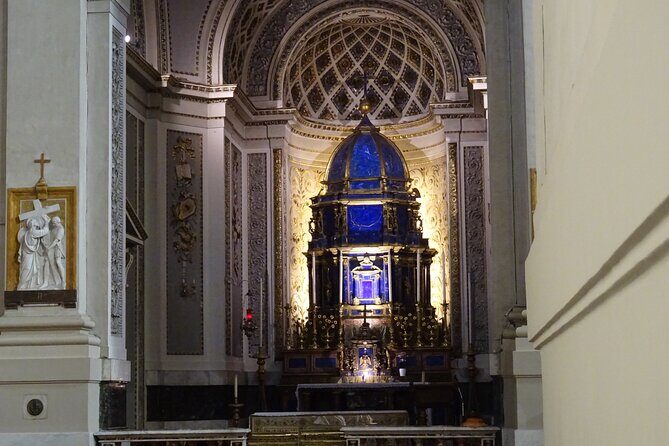
First, there’s Chiesa del Gesù, known for colorful, intricate decor inside. This stop is less about a single landmark feature and more about visual overload—in the best way. The guide helps you see the decor as purposeful, not just decorative.
Then you’ll reach Santa Maria dell’Ammiraglio, also called La Martorana. This church is famous for multiple styles meeting in one place. With centuries of changes, it absorbed different tastes in art, architecture, and culture. That kind of layered feel is a big reason UNESCO Arab-Norman Palermo works as a walking experience: the history isn’t hidden behind text.
Here’s the food connection that I really appreciate. The nuns associated with the Martorana were famous for moulded marzipan made in the form of fruits. Even though the convent no longer exists, frutta di Martorana is still one of Palermo’s most distinctive foodstuffs. It’s a rare case where a sweets tradition is directly tied to a church story you can stand in front of.
Finally, there’s the Church of St. Cataldo (San Cataldo). Built in the 12th century, it’s famous for its three red domes. Admission is not included for this stop, so if you want entry, plan for extra cost. Still, the domes are a strong visual identity even when you’re just viewing the exterior.
If you’re short on time and debating which churches to care about most, my advice is to prioritize the ones the guide frames as style-collision points. That’s where Palermo’s architecture starts to feel personal.
What’s Included, What’s Not, and How to Budget Smartly
This tour is priced at $39.91 and includes a local guide plus a professional guide. Port pickup is also included, which can be a real time-saver if you’re arriving by ship.
Several key stops have free admission: Capo Street Market, the Cathedral area, Quattro Canti, and Fontana della Vergogna. That’s excellent because it means you’re not constantly thinking about ticket lines or extra payments while you’re learning.
But some entrances are not included, including Teatro Massimo and the churches at Santa Maria dell’Ammiraglio (La Martorana) and St. Cataldo. If you want to go inside those, you’ll need to budget entrance fees separately.
My practical approach: decide in advance whether you care more about interiors or exteriors. If you’re aiming for quick exterior views plus the guided story, you’ll likely keep costs closer to the base price. If you want the full inside access at the ticketed stops, plan for extra spending.
Also bring your own water. The tour doesn’t mention drinks being provided, and the heat issue is real enough that it comes up.
Group Size, Pace, and Meeting-Point Tips That Save Stress
The group size is capped at 12 per booking, with a maximum of 18 travelers. That’s the sweet spot for a walking tour: small enough to hear the guide, large enough that it doesn’t feel like you’re walking with just one lonely person and a clipboard.
You should meet in Piazza Vincenzo Bellini. The start address is given clearly, and that’s good news. Still, there’s a known risk with popular squares: it’s easy to look at the wrong corner for 15 minutes while the city keeps moving.
So here’s what I do: arrive 10 minutes early, stand in a spot that feels central to the meeting square (not at the far edge), and confirm you have the right tour name when you spot your guide.
The tour ends in front of Santa Caterina church. The end point is about a 20-minute walk from the start. That’s helpful because you can plan a meal after the tour without rushing. Just don’t assume your hotel is a quick hop away.
Dress code is smart casual. Think comfortable layers and shoes you can walk in for a couple hours. Palermo can go from warm to bright-fast, so layers help.
Should You Book This Walking Tour?
I’d book this if you want a structured first look at central Palermo without doing a chart-and-map scavenger hunt. You’re getting a strong mix of architecture and street-level food culture, plus UNESCO context that helps the buildings click.
It’s also a good pick if you like guides who explain more than facts. The experience stands out when someone can connect Teatro Massimo, the Cathedral complex, baroque squares, and the church cluster into one coherent walk.
Who it’s best for:
- First-time visitors who want highlights in about 3 hours
- People who enjoy walking but want less planning stress
- Travelers who like food markets and want snack options without turning it into a full-on food day
Who might hesitate:
- If you’re very sensitive to heat and long pauses feel important, build in your own water rhythm and be ready for a continuous walk pace.
- If you only care about museums or paid interiors, note that some key entries are not included.
One last practical note: it’s rated 4.9, and it’s widely recommended, so you’re usually in good hands. And if plans change, free cancellation is available up to 24 hours in advance, which makes the decision easier.
FAQ
How long is the walking tour?
The tour lasts about 3 hours.
What does the tour cost?
The price is $39.91 per person.
Is the tour offered in English?
Yes, it is offered in English.
Do I need tickets on my phone?
You get a mobile ticket.
What is included in the price?
The tour includes a local guide and a professional guide, plus port pickup.
Are there any entrance fees?
Some stops have free admission, while others are not included for entry (including Teatro Massimo and certain churches).
What should I wear?
The dress code is smart casual.
Where does the tour start and end?
It starts at Piazza Vincenzo Bellini and ends in front of the Santa Caterina church.
Can children join?
Children must be accompanied by an adult. A child rate applies only when sharing with 2 paying adults.