REVIEW · PALERMO
Palermo Tour: Magnificent Mixture Of Architectural Styles
Book on GetYourGuide →Operated by Italygonia Travel T.O. · Bookable on GetYourGuide
Palermo is a city you read by walking, not by postcard. This 2-hour guided stroll through Palermo’s historic center mixes big architecture moments with everyday street life, from Teatro Massimo to the markets. If you like seeing how cultures stack on top of each other, this route is built for you.
I especially like the contrast: grand stops like the Cathedral of Palermo and the Teatro, followed by the noise and character of Palermo’s markets. You also get a strong sense of place through the route’s Arabic-influenced neighborhood feel, not just a list of sights.
One consideration: royal tomb access isn’t included, so if you want to see the tombs connected to Frederick II of Swabia, you’ll need a separate ticket. Also, it’s a walking tour, so plan for lots of on-foot time in central Palermo.
In This Review
- Key things that make this tour worth your time
- Starting at Piazza Politeama: how the route gets you oriented fast
- Via Ruggero VII and Principe di Belmonte: the street level of Palermo
- Teatro Massimo: the stop that makes Palermo feel grand
- Arabic-origin neighborhood streets to Capo Market: where Palermo turns real
- Palermo Cathedral and Frederick II: what you should know before you go
- Vucciria open market and the return through Piazza San Domenico
- How the guide experience shapes the tour (and why it shows up in reviews)
- Price and value: what $344.39 covers in real terms
- Who should book this Palermo architectural and market walk?
- Should you book this tour?
- FAQ
- What is the meeting point for the Palermo tour?
- How long is the tour?
- Where does the tour end?
- Is this a private group?
- What’s included in the price?
- What is not included?
- Which languages are available?
- How much does the tour cost?
- Are there any cancellation options?
Key things that make this tour worth your time
- Teatro Massimo as your early anchor: the route starts with Palermo at its most dramatic
- Arabic-origin streets and alleys that explain the city’s layers, not just its buildings
- Capo Market and its real-market atmosphere in the middle of the story
- Cathedral of Palermo with connections to Frederick II of Swabia and family
- Vucciria open market before you circle back through key squares
- Strong guide energy: reviews highlight guides like Roberta and Marilou for flexible, well-tuned explanations
Starting at Piazza Politeama: how the route gets you oriented fast
The tour kicks off near Piazza Ruggiero Settimo (right by the Politeama Theater), which is a smart setup if you’re trying to get bearings quickly. Instead of starting in the deepest maze of old streets, you begin where major roads meet and the city feels easier to navigate.
From there, you follow streets that local people use like everyday hallways. You’ll pass Via Ruggero VII, often described as the living room of Palermo, and that matters because it frames Palermo as a working city, not a museum. As you walk, the guide helps you connect what you see—shops, facades, street rhythm—with what shaped the city over time.
For me, the best tours do two jobs at once: they show you where to look and they teach you how to read the city when you’re on your own later. This one is built for that. You leave with a mental map and a better sense of what to prioritize when you return.
If you're still narrowing it down, here are other tours in Palermo we've reviewed.
Via Ruggero VII and Principe di Belmonte: the street level of Palermo
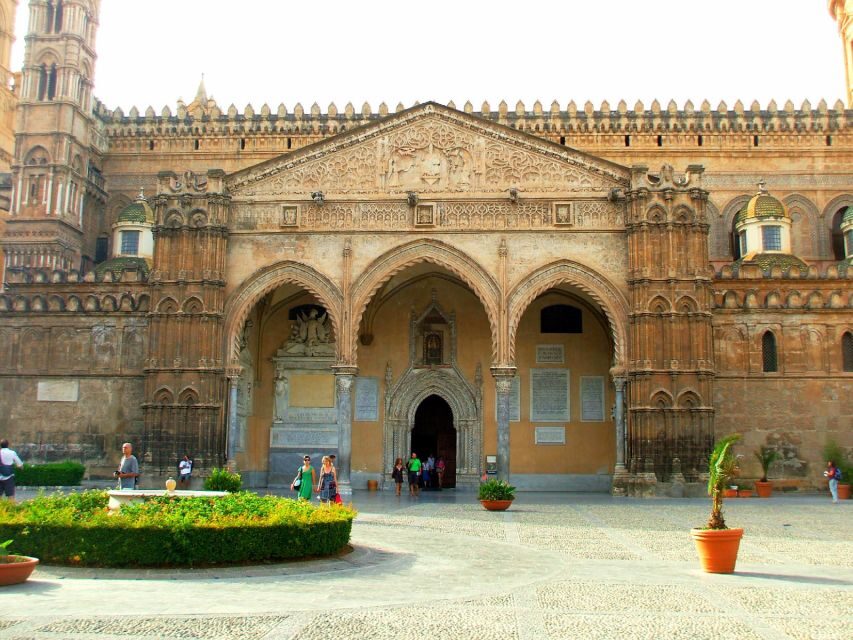
You’ll walk along Via Ruggero VII, then move toward via Principe di Belmonte, where historic shops line the way. These are not just transit streets on the way to the next landmark. They’re part of the “feel” of Palermo—the everyday geometry that makes the historic center feel alive.
This is where the tour earns its points for balance. Big architecture is great, but street life is what tells you how Palermo actually functions. You’ll notice how shopfronts, narrow views, and crowd patterns shift as you move through different areas. A good guide keeps you from getting lost in the noise by giving you a simple storyline: why these buildings and streets look the way they do, and how different eras left marks.
If you like photos, this is also where your camera gets fed without you forcing it. The best Palermo shots often come from angles where you can see layers—people moving through an alley, a historic storefront, and a grand facade trying to be seen through traffic.
Teatro Massimo: the stop that makes Palermo feel grand
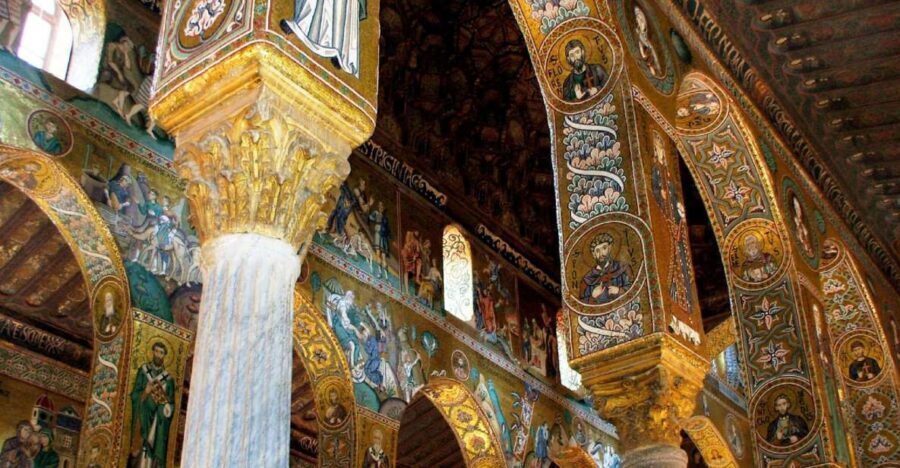
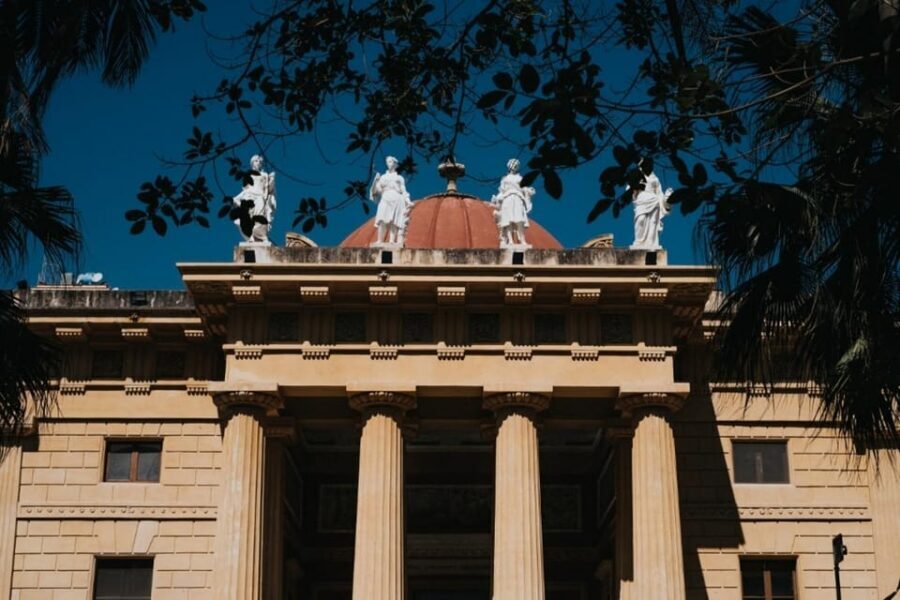
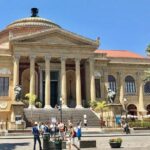
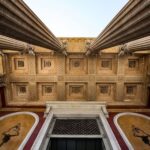
Then comes a dramatic pivot. You’ll arrive at Teatro Massimo, the largest lyric theater in Italy and the third largest in Europe. Even if you don’t plan on buying a show ticket, this stop gives you a sense of Palermo’s ambition—how a city that’s often described through folklore also built serious cultural institutions.
What I like about placing the theater after getting oriented is timing. At that point you’ve walked enough to feel like you’re in Palermo, but not so long that you’re tired of context. The guide can point out architectural cues and explain why the theater matters, not just that it’s large.
There’s also a practical side. Teatro Massimo acts like a clear visual landmark in your mind. Later, when you’re wandering on your own, you’ll remember where you started and how the streets flowed outward from this major point.
Arabic-origin neighborhood streets to Capo Market: where Palermo turns real
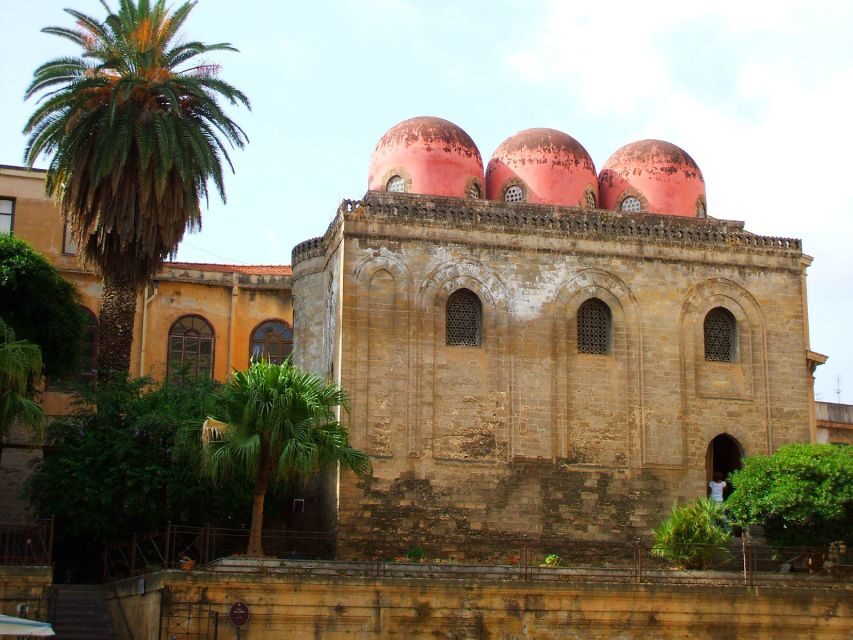
After Teatro Massimo, the walk moves into alleys and streets tied to Arabic origins. This is the kind of architectural context that’s hard to grasp from a guidebook sentence. On foot, you can actually see how the city’s layout and building style create a distinct neighborhood character.
Next you reach Capo Market, described as Palermo’s most famous market. This is the moment where the tour shifts from “architecture lesson” to “lived-in city.” Markets here aren’t staged. You’ll experience the bustle, the crowd flow, and the way people move around stalls—exactly the stuff that makes you understand why local food and daily life are so tied to place.
One caution: markets can be crowded and busy with foot traffic. If you’re the type who gets stressed in tight spaces, you’ll still manage it, but you’ll want to keep your pace steady and follow your guide closely.
Palermo Cathedral and Frederick II: what you should know before you go
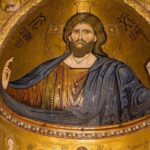
The tour continues toward the Cathedral of Palermo, with a key historical thread: the remains of Frederick II of Swabia and his family are kept there. That’s the sort of detail that can change how you see the building. Instead of just admiring the facade, you start thinking about who ruled, how the city mattered, and why this place became a focal point over generations.
The big practical detail: tickets for the royal tombs are not included. So if you want that specific part of the cathedral experience, plan for an add-on. Even if you don’t, the cathedral stop itself is still a major checkpoint—because it anchors your walk in Palermo’s most important religious and historical identity.
I also appreciate how the tour positions the cathedral after the markets and neighborhood streets. It’s a reminder that Palermo’s story isn’t only in palaces and theaters. It’s also in how people gathered, traded, prayed, and lived in the same city blocks.

Vucciria open market and the return through Piazza San Domenico
After the cathedral, you visit Vucciria, described as Palermo’s historic open market. This stop reinforces what you felt at Capo Market, but with its own mood and crowd patterns. Seeing two markets back-to-back is useful because it trains your eye: you start separating what’s truly different about each place instead of lumping them together as just “markets.”
The tour then brings you back toward Piazza San Domenico Square and ultimately ends back near where you started, around the Politeama area. That loop matters. You’re not dropped off mid-stream. You come full circle, which helps if you’re continuing your day on your own.
If you want to extend your outing after the tour, this ending setup gives you options. You’ll have a clear reference point (Piazza Politeama / the theater area) so you don’t feel like you’re guessing your way back through the city’s tighter streets.
How the guide experience shapes the tour (and why it shows up in reviews)
This is a private group with a licensed guide, and that format usually improves the pace and attention you get. It also helps explain why reviews emphasize guide flexibility and deep knowledge.
Names that came up include Roberta and Marilou. The feedback points to guides who connect local sites to wider historical context, and who also share lesser-known details—things that don’t always show up on standard “see-this-in-1-hour” lists. In other words, you’re not just touring objects. You’re building understanding, plus a few extra street-level tips for what to notice next.
Languages offered include Spanish, English, French, German, and Italian. That matters if you’re picky about getting nuance rather than just facts. When the guide can explain clearly in your language, the architecture and market stops land with more meaning.
Price and value: what $344.39 covers in real terms
The price is listed at $344.39 per group up to 25, and the tour lasts 2 hours. Since it’s a private group, the value depends on how many people you’re booking with. If you’re traveling with family or friends and can fill part of the group, the per-person cost often becomes easier to justify.
What you’re getting for that money is straightforward: a licensed guide and a structured route through major stops—Teatro Massimo, Capo Market, Palermo Cathedral, and Vucciria—plus the narrative glue that turns those into a single story. Tickets for the royal tombs are not included, so treat that as a potential extra cost if that portion is important to you.
From a practical standpoint, I think the sweet spot here is people who want the “best hits” of Palermo’s center but also want the why. If you just want a quick checklist, you could do that on your own. If you want context while walking, this format makes more sense.
Who should book this Palermo architectural and market walk?
This tour fits well if you:
- Want a 2-hour walk that balances architecture and everyday Palermo street life
- Like learning about Arabic influences as part of the city’s physical layout
- Care about major landmarks like Teatro Massimo and Palermo Cathedral
- Enjoy market stops but still want historical framing (not just eating and wandering)
It may be less ideal if you:
- Only want cathedral/tomb content and don’t care about markets or neighborhood streets
- Need a very low-crowd route, since markets can be busy
Should you book this tour?
I’d book it if you want Palermo to feel coherent, not random. The route ties together the theater, the cathedral, and two major markets with an emphasis on how different cultural layers shaped the city’s look and street pattern. With a licensed guide—and based on review praise for people like Roberta and Marilou—you’re likely to get explanations that make the walk easier to understand and more enjoyable to repeat on your own later.
If tomb access is a must for you, check your plan for the royal tomb ticket, since it’s not included. Otherwise, this is a strong choice for a first or second day in Palermo when you want both big sights and real street energy without spending your whole afternoon on transit.
FAQ
What is the meeting point for the Palermo tour?
The tour starts at Piazza Ruggiero Settimo square, in front of the Politeama Theater, next to the statue.
How long is the tour?
The tour duration is 2 hours.
Where does the tour end?
This activity ends back at the meeting point.
Is this a private group?
Yes, it’s listed as a private group.
What’s included in the price?
A licensed guide is included.
What is not included?
Ticket royal tombs, tastings/lunch/dinner, and transportation/pickup or drop-off are not included.
Which languages are available?
The live tour guide is available in Spanish, English, French, German, and Italian.
How much does the tour cost?
The price is $344.39 per group up to 25.
Are there any cancellation options?
There is free cancellation with cancellation allowed up to 24 hours in advance for a full refund.