REVIEW · PALERMO
Discover Palermo in 3 hours. Art, history, markets and street food
Book on Viator →Operated by Palermo a Piedi - Walking Tour · Bookable on Viator
Palermo can be a lot to take in, fast. This 3-hour walk gives you the big landmarks and the smaller “why does it look like that?” details, with an expert who talks you through art, history, and street life in Italian. I love how the route mixes official monuments (like the Palermo Cathedral) with everyday places (like the Capo market).
My second favorite part is the storytelling. You’re not just looking at buildings—you’re hearing the city’s characters and legends, including Teatro Massimo and the Florio family, plus darker tales like the Beati Paoli and the murder story tied to the Baroness of Carini.
One consideration: it’s Italian-only. If you don’t read or follow spoken Italian well, you’ll still see plenty, but you may miss a lot of the meaning behind what you’re standing in front of.
In This Review
- Key highlights you’ll actually feel on the walk
- A 3-hour plan that helps you read Palermo quickly
- Capo Street Market: where the day-to-day starts (and tastings tempt you)
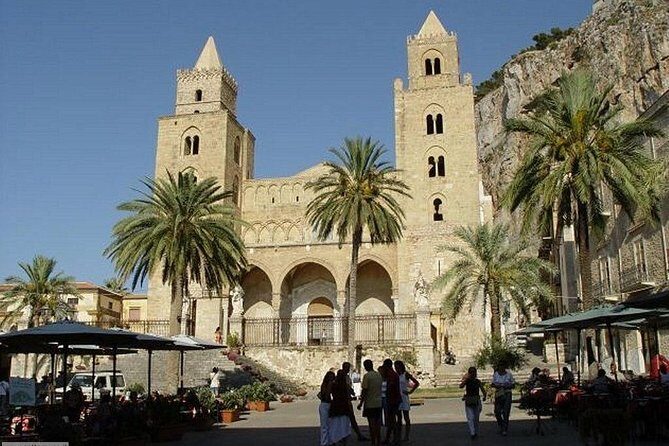
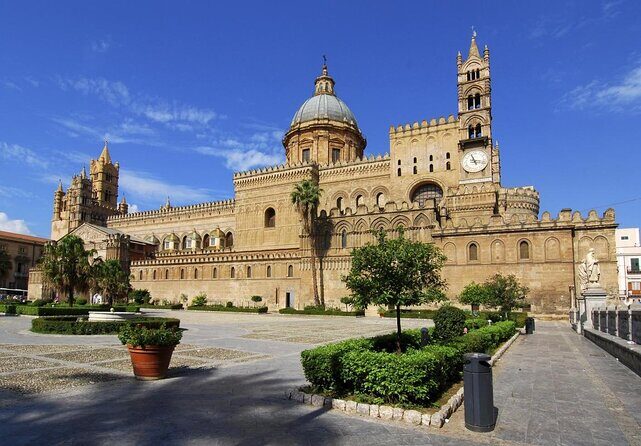
- Palermo Cathedral: Norman-Arab art with royal weight
- Piazza Giuseppe Verdi (Piazza Massimo) and Teatro Massimo’s power
- Quattro Canti and the baroque “stage set” view of old Palermo
- Piazza Pretoria and the Fountain of Shame story
- Piazza Olivella, Sant’Ignazio, and the museum stop
- Piazza Bellini, Martorana, San Cataldo, and Santa Caterina
- Teatro dell’Opera dei Pupi and the Cassaro approach
- Walking the walls and entering Porta Carini
- Price, time, and the Italian-only reality
- Who this tour is perfect for (and who should choose something else)
- Should you book Palermo in 3 hours?
- FAQ
- Is the guide only Italian?
- What’s included at Capo Street Market?
- Is Palermo Cathedral entry included?
- How long is the tour, and what’s the group size?
- Is it suitable for cruise passengers?
- Can I get a full refund if I cancel?
Key highlights you’ll actually feel on the walk
- Capo Street Market inside the old Arab market area, with free tastings if you want them
- Norman-Arab Palermo Cathedral, including royal tombs and Santa Rosalia’s chapel
- Belle Epoque Palermo at Piazza Giuseppe Verdi (Teatro Massimo area) and its Florio connection
- Baroque city geometry at Quattro Canti, the classic crossroad view of old Palermo
- Fontana Pretoria, and why Palermitans call it the Fountain of Shame
- Piazza Bellini + key churches, from the Martorana to San Cataldo and Santa Caterina
A 3-hour plan that helps you read Palermo quickly
If you’re short on time, you want two things: the obvious sights, and the context that makes them click. This walk is built for that. In about three hours, you move through the historic core on foot, hitting major squares, big churches, and one of the city’s signature street markets.
What makes it work is the balance. You get the art you came for—baroque churches, Norman-Arab architecture, and Renaissance sculpture—but you also get the human angle. The guide ties together why Palermo looks the way it does, including the city’s Arab-Norman layer and the later Belle Epoque era tied to Teatro Massimo and the Florio dynasty.
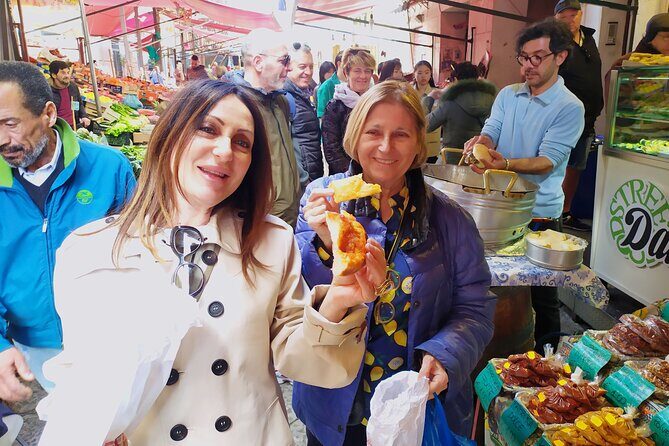
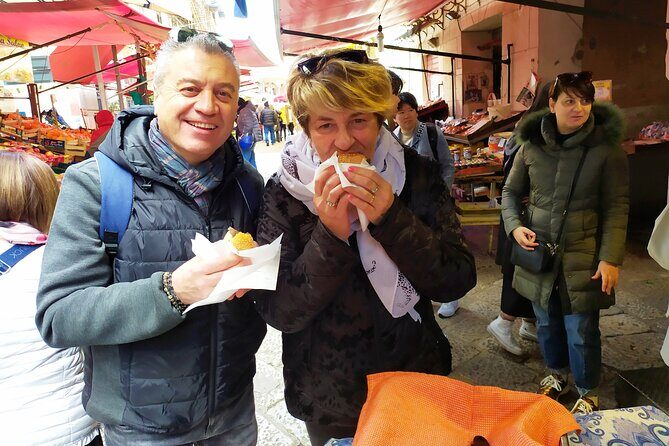
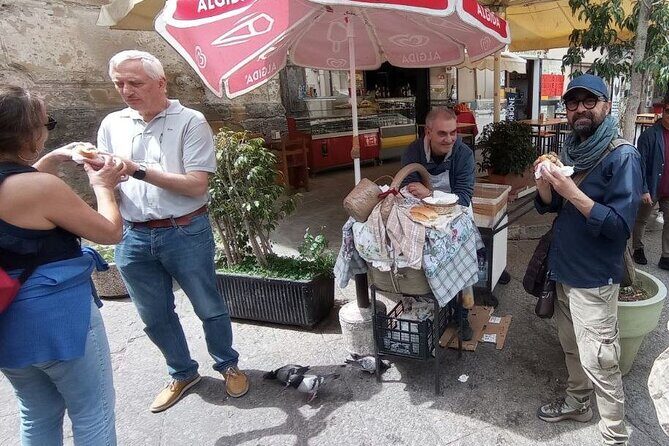
And yes, there’s food. You pass through Capo Street Market, where the guide brings you into the flow of daily life and offers free tastings along the way. It’s the kind of stop that makes you feel like you’re in Palermo, not just touring it.
Other street food tours we've reviewed in Palermo

Capo Street Market: where the day-to-day starts (and tastings tempt you)
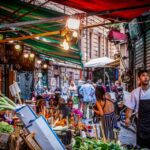
Your first big moment is the ancient Capo market area—along via Porta Carini and via Bandiera. This isn’t a museum market. It’s a working street scene with food and a mix of goods that reflect Palermo’s deep layers, including Arab origins. You can see why locals keep coming back.
The tour includes admission to the market, plus free tasting stops for food and drinks (you choose whether to taste). For me, that’s a smart approach: you get the market without being forced into a set meal you didn’t plan.
Practical tip: markets move fast. Go in ready to slow down visually—look at stall layouts, ingredients, and how people shop. Then let the guide point out what’s worth trying. If you’re the type who likes to eat on your own schedule, you’ll still be fine because the tastings are optional.
Palermo Cathedral: Norman-Arab art with royal weight
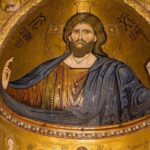
The walk then turns to a classic “don’t miss” stop: Cattedrale di Palermo. This is described as a masterpiece of Norman Arab art, built in 1185, and it carries multiple layers inside, which is exactly what you want in a short visit.
You’re in the right place for:
- the royal tombs
- the chapel of Santa Rosalia (Palermo’s major religious figure)
- an extraordinary sundial
- and other works of art that help explain how different cultures shaped the same city
The best part of doing this with a guide is not the facts—it’s how the facts connect. You start to understand why Palermo’s architecture feels like it’s telling more than one story at the same time. And when you know that, you notice details you’d otherwise walk past.
Bonus for tickets: cathedral entry is free in the stop list, and it’s also included in the tour price overall. So you’re not scrambling for entry times in the middle of your walking day.
Piazza Giuseppe Verdi (Piazza Massimo) and Teatro Massimo’s power
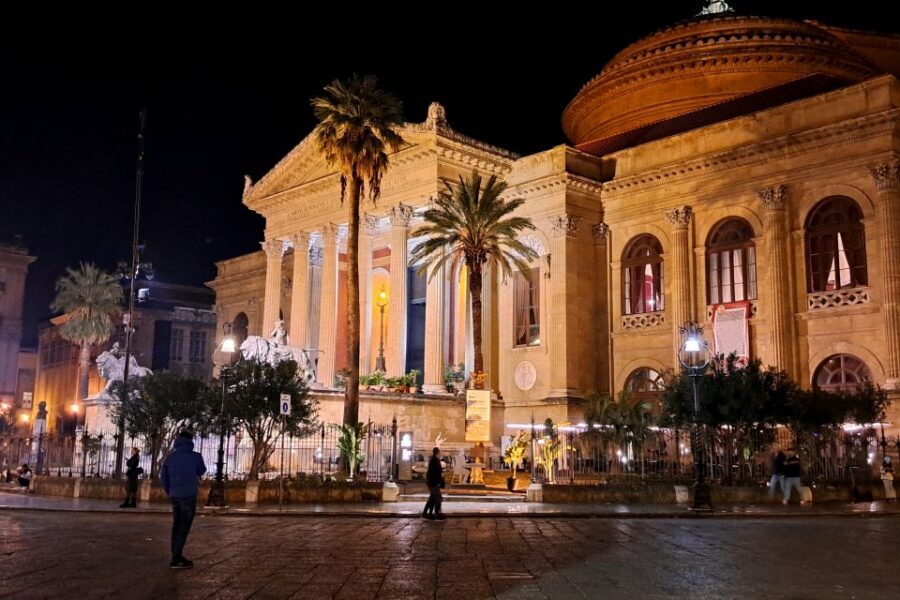
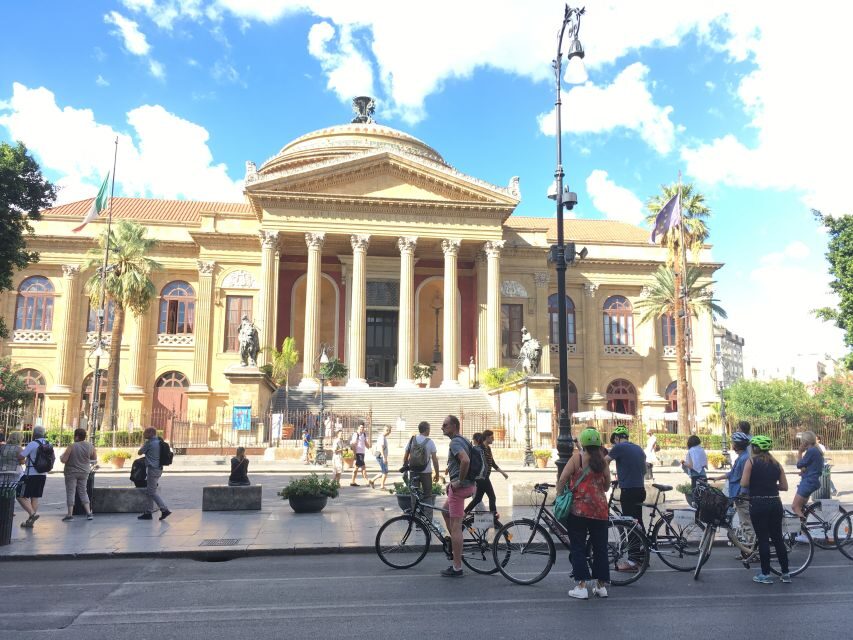
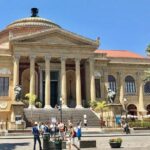
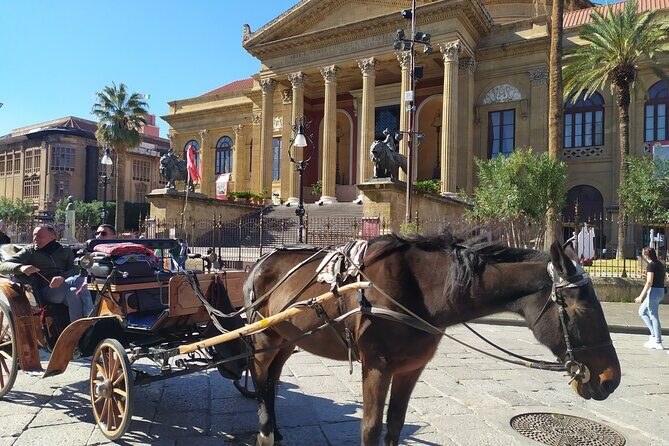
Next comes the neoclassical theater zone at Piazza Giuseppe Verdi, also known as Piazza Massimo. This is where you get the big-scale drama of Palermo’s Belle Epoque phase.
Teatro Massimo is framed here as the symbol of that era, tied to the Florio family. Even if you only see the exterior from the square, this stop does something useful: it interrupts the medieval-and-baroque flow and reminds you that Palermo kept evolving.
You’ll want a minute to just stand back and take it in. Neoclassical buildings work like stage sets: the full effect is about proportions and how the street views line up.
Quattro Canti and the baroque “stage set” view of old Palermo
After that, you land at Quattro Canti, the scenic baroque square that acts like a centerpiece to the ancient city. This spot matters because it’s not just pretty—it’s a way to “read” old Palermo’s layout.
Quattro Canti is essentially a crossroad viewpoint. If you’re trying to orient yourself for the rest of your time in Palermo, this square is a strong anchor.
And because the stop is a square (no ticket needed), you can take your time. You’ll get that classic Palermo feeling of layers stacked on layers—baroque details, old street lines, and the sense that you’re standing at the meeting point of different eras.
Other food & drink experiences in Palermo

Piazza Pretoria and the Fountain of Shame story
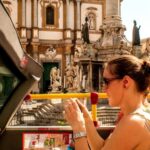
Then you hit Piazza Pretoria, one of the city’s symbols. The star is the fountain: Fontana Pretoria, with 48 statues of white Carrara marble, sculpted in the Renaissance by Tuscan sculptors.
Here’s why this stop sticks: you don’t just see the fountain. The guide explains why Palermitans nickname it Fontana della Vergogna, the Fountain of Shame. That kind of local explanation changes the mood instantly. Suddenly it’s not only “beautiful Renaissance sculpture,” it’s a piece of Palermo’s humor and opinion—history with an attitude.
If you like photos, this is a good place to pause for them. The fountain’s scale and the statue lineup give you options for different angles.
Piazza Olivella, Sant’Ignazio, and the museum stop
At Piazza Olivella, you get a more rounded “culture plus church” moment. The square is scenic on its own and is linked here to the Baroque church of Sant’Ignazio and the Archaeological Museum (with ticket entry included on this stop).
Even if your museum time is limited, this stop adds breathing room from only churches and big squares. It also helps you connect Palermo’s art and architecture to the older layers beneath them.
Practical note: if you’re the type who gets museum-fatigue, use the museum time strategically. Focus on the sections that connect to the themes the guide is talking about—otherwise it can feel like “a lot of rooms.”
Piazza Bellini, Martorana, San Cataldo, and Santa Caterina
Now you’re in the monumental zone at Piazza Bellini. This is one of those squares where the buildings feel like a lesson in how Palermo absorbed different influences.
You’ll look at major churches associated with:
- the Church of the Martorana (12th century)
- the Arab-style church of San Cataldo
- the Church and Monastery of Santa Caterina
This stop really earns its place because it visually reinforces the guide’s bigger theme: Palermo is a mix of identities, not one neat style. When you see Arab-style elements next to later Christian monuments, you understand why Palermo can feel “different” in the best way.
Time saver: use the guide’s story moments here. With only a few minutes per stop, you want the explanation that helps you see the differences quickly.
Teatro dell’Opera dei Pupi and the Cassaro approach
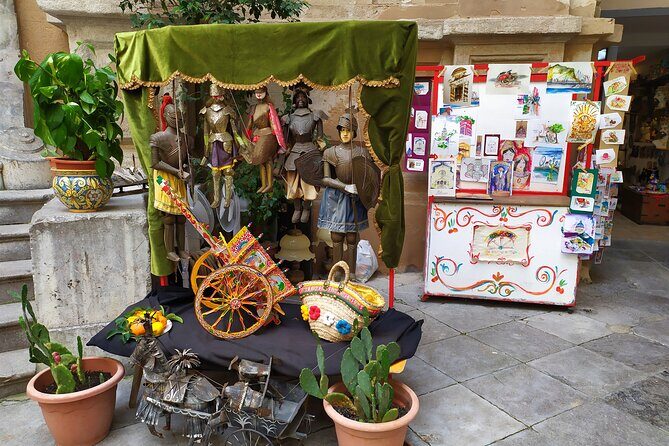
Near the end, you’ll pass by Teatro dell’Opera dei Pupi, associated with Mimmo Cuticchio. It’s tied to Palermo’s traditional puppet theater dating back to around 1800, and it’s also listed as UNESCO Heritage.
This is a great stop if you like culture that’s not only about architecture. Opera dei pupi is theater with local roots, and it helps balance the “stone city” focus of the earlier stops.
Then the route shifts back toward the city’s older spine: the Cassaro, described as the oldest street in Palermo, lined with palaces, churches, and convents. You don’t get endless time there, but you do get the key idea—Palermo’s main historic corridor is where many stories overlap.
Walking the walls and entering Porta Carini
The final historic vibe comes from the area around Mura, Bastione e Porta Carini—ancient walls from the first half of the 16th century—and Porta Carini, where you enter toward the Capo market area.
This “edge of the old city” moment helps the walk feel complete. It gives you a sense of the city boundaries, how people moved, and why the market area has such an intense atmosphere.
Even if you don’t memorize the dates, you’ll feel it. Streets like this don’t just connect sights; they connect eras.
Price, time, and the Italian-only reality
Let’s talk value, because this is where short tours either work or feel overpriced.
For $34.76 per person and about 3 hours, you’re paying for a guided walk that bundles:
- market access
- free tastings (optional)
- Palermo Cathedral access (included)
- included entries on specific stops (like the Archaeological Museum at Piazza Olivella)
- and a guide who tells you the stories that make the buildings meaningful
You also get small group size (max 16 travelers). In a historic center walk, that matters. You don’t want to be stuck behind people at the Cathedral stairs or fighting for a clear view at a fountain.
The biggest trade-off is obvious: the tour is only in Italian. The route sounds like it covers art, legends, and food tips. If you can follow Italian conversation, you’ll get more. If not, plan to treat it as a visual highlight reel.
One other consideration pulled from the vibe of the experience: the walk is packed with exterior views, and you might wish for even more time inside certain spots. The structure is designed for pace, not for deep museum time.
Who this tour is perfect for (and who should choose something else)
This is a strong fit if:
- you want an efficient first look at Palermo’s historic center
- you like street food and markets, not just churches
- you want city orientation without spending your whole day planning
- you enjoy story-driven guides who connect monuments to local legends
It may be less perfect if:
- you want a lecture-heavy tour in English (this is Italian-only)
- you prefer slow travel and long museum visits
- you’re sensitive to walking on crowded streets and busy market areas (it’s a walking tour through active parts of town)
If you’re on a short stay or arriving by cruise, this makes extra sense since it’s designed as a short-distance experience from the port area, with helpful info provided for cruise timing.
Should you book Palermo in 3 hours?
I’d book it if you want to feel Palermo quickly and leave with a mental map, not just a list of landmarks. The Cathedral stop, the baroque squares, Fontana Pretoria, and the market area give you a well-rounded mix in a tight timeframe.
The deciding factor is language. If you can follow Italian, you’re likely to get a lot of value from the storytelling side—events around Teatro Massimo and the Florio family, plus the darker local tales like Beati Paoli and the Baroness of Carini story. If Italian is a struggle, you’ll still enjoy the architecture and the squares, but you may feel like you’re missing the point.
If you’re the type who loves learning how a city thinks, this walk is one of the best ways to get started—fast, local, and very Palermo.
FAQ
Is the guide only Italian?
Yes. This tour is only in Italian, and the guide provides the narration in Italian throughout.
What’s included at Capo Street Market?
You get entrance to the Capo Market and the tour includes free stops for food and drink tastings (you can choose whether to taste).
Is Palermo Cathedral entry included?
Yes. Entrance to the Palermo Cathedral is included in the tour price, and the cathedral stop is listed as admission included/free for the tour context.
How long is the tour, and what’s the group size?
The tour lasts about 3 hours. The maximum group size is 16 travelers.
Is it suitable for cruise passengers?
It’s described as excellent for cruise passengers because it’s a short distance from the port, and the provider gives you necessary information for cruise timing.
Can I get a full refund if I cancel?
Yes. You can cancel for a full refund if you cancel up to 24 hours in advance of the experience’s start time.